
Table of Contents
- Why Gardening in Dry Climates Demands a Different Approach
- Selecting Drought-Tolerant Plant Varieties for Your Garden
- Soil Preparation and Amendment: Building Water-Holding Capacity
- Best Mulch for Dry Climates and Proper Application
- Efficient Garden Watering Techniques That Reduce Evaporation
- Microclimate Mapping and Water Harvesting for Maximum Efficiency
- Managing Soil Moisture and Preventing Heat Stress
- Conclusion
- Frequently Asked Questions
Last Updated: September 3, 2026
Why Gardening in Dry Climates Demands a Different Approach
Gardening in dry climates isn't just about doing what works elsewhere and hoping for the best. The fundamentals shift entirely. Water scarcity, intense sun exposure, rapid evaporation, and shallow soil moisture all conspire against traditional gardening methods. What thrives in humid regions withers in arid ones because the underlying soil chemistry and water dynamics are fundamentally different.
Gardening tips for dry climates require a strategic rethinking of how you prepare soil, select plants, apply water, and manage the root zone. The goal isn't to fight the environment, it's to work within it. The good news: once you shift your approach, dry-climate gardening becomes predictable and productive.
The real challenge isn't the dryness itself. It's that most gardeners underestimate how much their soil structure, watering method, and plant selection need to change. A tomato plant that thrives on twice-weekly watering in humid regions might need a completely different hydration strategy where evapotranspiration rates are three times higher. This guide covers the seven core strategies that make the difference between struggling plants and thriving ones, even when water is scarce.
Selecting Drought-Tolerant Plant Varieties for Your Garden
The first rule of gardening in dry climates is simple: stop fighting nature by planting varieties that demand constant water. Drought-tolerant plants have evolved or been selected to thrive in low-moisture conditions through deeper root systems, waxy leaf coatings, reduced foliage, or other water-efficient adaptations.
For vegetable gardeners, this doesn't mean abandoning tomatoes, peppers, or squash. It means choosing varieties bred for arid regions. Armenian cucumber, desert-adapted pepper varieties, and heat-stress-tolerant tomato cultivars perform far better than standard varieties. Native species adapted to your specific region's climate are your strongest foundation, they've survived local conditions for centuries without supplemental irrigation.
Succulents and perennial plants with deep root systems are workhorses in dry climates. Once established, they require minimal watering because their root zones extend far deeper than annual vegetables, accessing moisture layers annual plants never reach. Combining perennials with carefully selected annuals gives you both productivity and resilience.
The mistake most gardeners make is planting based on what they want to grow rather than what will actually survive. A plant struggling against its environment consumes more water trying to stay alive, not less. When you select varieties naturally suited to dry conditions, you're not compromising, you're working smarter. The water savings compound over an entire growing season.
Soil Preparation and Amendment: Building Water-Holding Capacity
Dry-climate soil is often the real problem, not the climate itself. Native soil in arid regions tends to be compacted, low in organic matter, and poor at moisture retention. Water runs through it or sits on the surface instead of soaking into the root zone where plants need it.
Amending soil with organic matter is non-negotiable. Compost, aged manure, peat moss, or coconut coir dramatically increase water-holding capacity. A soil rich in organic material can hold three to four times more moisture than depleted, compacted earth. This isn't a minor improvement, it's the difference between watering every two days and every five days.
Deep soil preparation matters more in dry climates than anywhere else. Loosen compacted soil to at least 12 inches deep, breaking up clay layers that trap or shed water. Mix in 2 to 4 inches of compost or aged organic matter, working it throughout the root zone. This creates a soil structure that absorbs water efficiently and holds it where plant roots can access it.
Raised beds and containers give you complete control over soil composition, making them ideal for dry-climate gardening. You build the exact soil blend your plants need, high organic matter, proper drainage, and water retention all balanced. In regions with extremely poor native soil, raised beds often outperform in-ground planting because you're not fighting the underlying earth.
Soil biology matters too. Mycorrhizal fungi form symbiotic relationships with plant roots, extending their reach and improving nutrient and water uptake. Healthy soil microbiota support water infiltration and retention. Building living soil through compost and minimal disturbance pays dividends in water efficiency.
Best Mulch for Dry Climates and Proper Application
Mulch is your second line of defense against evaporation. The right mulch application can cut water loss by 50 percent or more, directly reducing how often you need to water (oregonstate.edu).
Organic mulches, wood chips, shredded bark, straw, are superior in dry climates because they break down over time, adding organic matter back into the soil while they suppress evaporation. Wood chips are durable, don't compact as easily, and create a stable microclimate at the soil surface. Apply 2 to 3 inches of mulch around plants, keeping it a few inches away from plant stems to prevent rot and pest issues.
Inorganic mulches like gravel or landscape fabric have limited benefit in dry climates. Gravel absorbs and radiates heat, actually increasing soil temperature and evaporation. Landscape fabric alone doesn't add organic matter and can become a barrier to water infiltration if not managed carefully.
The timing and depth of mulch application matter. Apply mulch after the soil has warmed in spring but before the hottest months arrive. In mid-summer, you can add a second layer if the first has settled. Deep mulch, 3 to 4 inches, provides better insulation and evaporation control than shallow applications, but monitor for moisture-loving pests that might hide in very thick mulch.
One common mistake is mulching too close to plant stems. This traps moisture against the plant base, encouraging fungal issues and rot. Leave a 3-inch clearance around each plant's stem before applying mulch. This small detail prevents disease while still capturing the full evaporation-reduction benefit.
Efficient Garden Watering Techniques That Reduce Evaporation
The method you use to deliver water matters as much as how much you apply. Overhead sprinklers are the enemy in dry climates, they lose 30 to 50 percent of water to evaporation before it ever reaches soil, and they wet foliage, increasing disease risk (ucanr.edu).
Drip irrigation and soaker hoses deliver water directly to the soil surface or root zone, minimizing evaporation and runoff. Water moves slowly into the soil rather than pooling or running off sloped terrain. This direct delivery is why drip systems are the standard for efficient garden watering techniques in arid regions.
Professional illustration showing Close for gardening tips for dry climates
Timing is equally critical. Water in early morning, between 5 and 8 a.m., when temperatures are coolest and evaporation rates lowest. Watering in late afternoon or evening risks fungal problems because foliage stays wet overnight. Morning watering gives plants moisture when they need it most and allows any foliage to dry quickly.
Deep watering less frequently beats shallow daily watering. Shallow irrigation wets only the top 2 to 3 inches of soil, encouraging shallow root systems and frequent watering needs. Deep watering, delivering water slowly enough for it to soak 6 to 12 inches down, encourages roots to grow deeper, where soil moisture is more stable. A plant with deep roots is far more drought-resilient than one with shallow roots.
Hydro-zoning, grouping plants by water needs, prevents waste. High-water plants go in one section with regular irrigation, while drought-tolerant plants occupy another area with minimal supplemental water. This targeted approach saves water and reduces the complexity of your watering schedule.
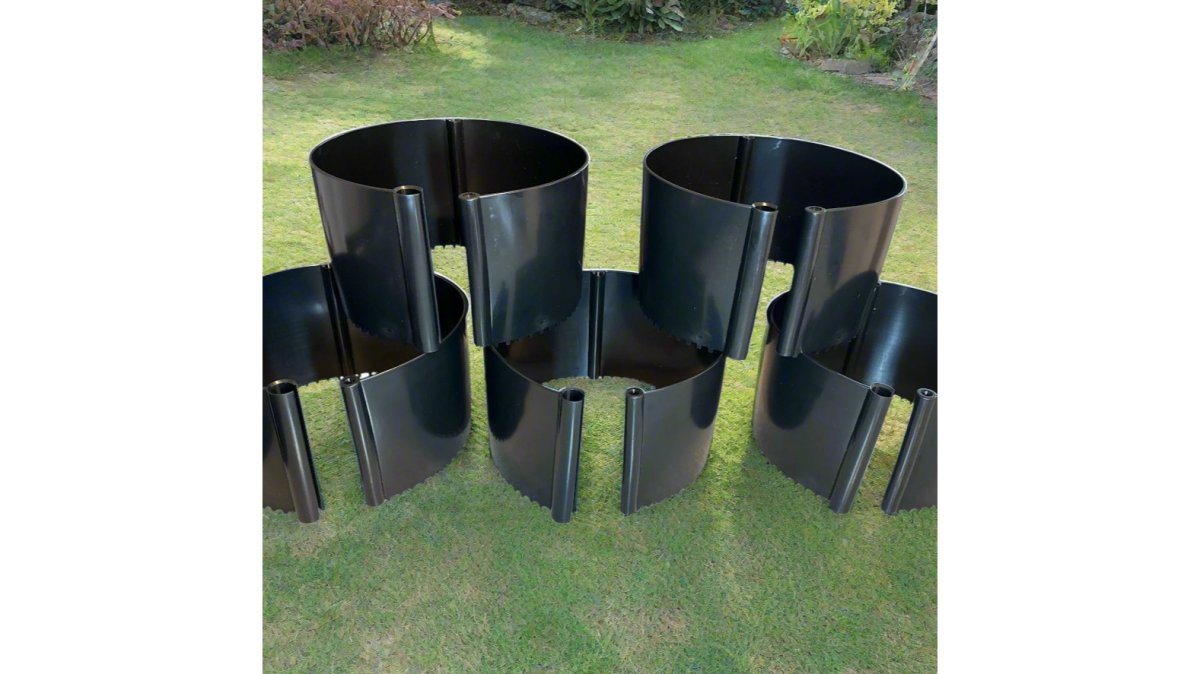
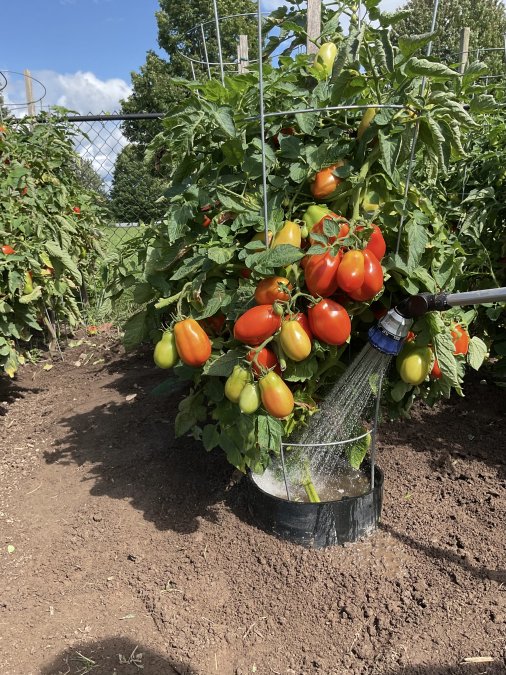
Garden Water Ring solves a specific problem in dry-climate watering: water runoff on sloped terrain. By holding up to 2 gallons of water directly at the root zone, it prevents the runoff that defeats other watering methods on uneven ground. Water stays where you put it, soaking into the root zone instead of flowing downhill.
Microclimate Mapping and Water Harvesting for Maximum Efficiency
Your garden isn't uniformly dry. Microclimates, small areas with distinct conditions, exist within every yard. A north-facing slope stays cooler and retains moisture longer than a south-facing one. Areas shaded by trees or structures receive less direct sun and evaporate water more slowly. Understanding these variations lets you tailor your approach rather than treating the entire garden identically.
Map your garden's microclimates by observing where water pools, where soil dries fastest, where shade falls at different times, and where wind exposure is highest. Plants in high-wind, full-sun areas need more water and more frequent checking than those in sheltered, partially shaded spots. Positioning drought-tolerant varieties in harsh microclimates and slightly more water-demanding plants in favorable ones maximizes your overall efficiency.
Water harvesting captures rainfall and runoff for later use. Rain barrels collect roof runoff, a single inch of rain on a 1,000-square-foot roof yields 600 gallons of water. In dry climates, even occasional rainfall is valuable. Positioning rain barrels strategically and using drip irrigation to deliver stored water extends your available supply significantly.
Contouring and terracing redirect water toward planting areas instead of letting it run off. Building slight berms or swales around plants creates shallow basins that capture and hold water longer, allowing deeper infiltration. This simple earth-shaping technique can reduce watering frequency by 20 to 30 percent.
Greywater systems, reusing water from sinks, showers, or washing machines, are practical in dry climates where every gallon counts. Greywater is safe for irrigation if it doesn't contain harsh chemicals. Routing it to your garden through a simple system extends your water supply without additional municipal demand.
Managing Soil Moisture and Preventing Heat Stress
Heat stress occurs when plants can't access enough water to cool themselves through transpiration. Leaves wilt, growth slows, and productivity drops. In dry climates, preventing heat stress is about maintaining consistent soil moisture in the root zone, not daily surface watering.
Soil moisture monitoring is essential. Stick your finger 2 to 3 inches into the soil. If it feels dry at that depth, it's time to water. If it's moist, wait. This simple check prevents both overwatering and underwatering. Soil moisture meters provide more precise readings if you're managing multiple planting areas.
Root-zone hydration is the goal. Water should soak deep enough to reach the entire root system, not just the top inch. For most vegetables, this means 6 to 8 inches of moisture. For established perennials and trees, it means 12 inches or deeper. Slow, deep watering achieves this far better than frequent shallow sprinkling.
Consistent moisture is better than fluctuating moisture. Plants stressed by alternating dry and wet periods use more water trying to recover and are more vulnerable to pest damage. Steady, moderate moisture, achieved through deep watering on a regular schedule, keeps plants stable and productive.
Shade management prevents unnecessary heat stress. In extremely hot climates, afternoon shade cloth can reduce soil temperature by 10 to 15 degrees Fahrenheit, cutting evaporation and plant stress. Shade is temporary, you can remove it in spring and fall when temperatures are moderate. This targeted approach protects plants during peak heat without reducing light during growing seasons when it matters most.
Garden Water Ring addresses a critical challenge in dry climates: keeping water at the root zone on sloped or uneven terrain. The 2-gallon capacity means you can water deeply and infrequently, encouraging root development and heat-stress resilience. The water-tight seal prevents evaporation loss, and the patented design keeps water from running off even on significant slopes. For gardeners managing uneven ground, this eliminates the frustration of water disappearing before it reaches roots.
Conclusion
Gardening in dry climates is challenging, but it's not impossible, it's just different. The seven strategies covered here address the core problem: keeping water where plants need it instead of losing it to evaporation, runoff, and poor soil structure. Start with soil amendment and mulch, add efficient watering techniques, and monitor moisture consistently. These fundamentals work across every dry climate and every garden type.
If you're managing sloped terrain or struggling with water runoff, Garden Water Ring's patented watering ring delivers water directly to the root zone while preventing evaporation and runoff. The 2-gallon capacity, USA-made durability, and water-tight seal make it a practical solution for dry-climate gardeners who want to reduce watering frequency and improve plant health. Shop now and get a 30-day money-back guarantee, risk-free.
Frequently Asked Questions
How can I improve soil moisture retention in arid conditions?
Amend your soil with 2-3 inches of organic mulch and work compost or aged manure into the top 6-8 inches before planting. This increases water-holding capacity and reduces evaporation loss. Drip irrigation systems and watering rings that deliver water directly to the root zone also minimize runoff. Deep watering once or twice weekly encourages roots to grow deeper, where soil retains more moisture naturally.
What are the best mulching practices for dry weather gardening?
Apply 3-4 inches of organic mulch like wood chips or straw around plants, keeping it 2-3 inches away from stems to prevent rot. Mulch reduces soil temperature and evaporation by up to 50%. In arid climates, refresh mulch annually as it breaks down and improves soil structure. Avoid piling mulch directly against plant stems, which can trap moisture and cause disease.
Should I water my garden every day in a drought?
No. Deep watering 1-2 times per week encourages stronger root development than daily shallow watering. Daily watering promotes weak surface roots and increases evaporation loss. In dry climates, water early morning to minimize evaporation, and use drip irrigation or soaker systems to deliver water directly to the root zone. Adjust frequency based on soil moisture—water when the top 2 inches feel dry.
What are some plants that thrive in dry climates and produce vegetables?
Drought-tolerant vegetable varieties include Armenian cucumber, Swiss chard, kale, peppers, eggplant, and certain squash varieties. Herbs like rosemary, oregano, and sage also perform well. These plants require less frequent watering and tolerate heat stress better than traditional tomatoes or lettuce. Pair them with native perennials to reduce overall garden water demand while maintaining productivity.
This article was written using GrandRanker


Leave a comment
This site is protected by hCaptcha and the hCaptcha Privacy Policy and Terms of Service apply.