
Table of Contents
- Why Water Disappears From Your Vegetable Garden
- How to Keep Garden Soil Moist With the Right Mulch
- Step 1: Water Early, Not at Midday
- Step 2: Use Drip Irrigation for Direct Root Delivery
- Step 3: Build Soil With Organic Matter
- Step 4: Manage Your Garden's Micro-Climate
- Step 5: Block Evaporation at the Root Zone
- Common Watering Mistakes That Waste Water
- Frequently Asked Questions
Last Updated: September 9, 2026
Why Water Disappears From Your Vegetable Garden
Water loss in a vegetable garden happens through evaporation from the soil surface and transpiration from plant leaves. Together, these processes form evapotranspiration, which can pull a surprising amount of moisture out of your beds on a hot afternoon.
Most home gardeners fight this battle by watering more often as the soil dries out, which treats the symptom rather than the cause. The real solution is about protecting the soil surface and delivering water where roots actually need it.
You can prevent water evaporation in vegetable gardens with a handful of smart techniques. Mulch, timing, irrigation method, soil structure, and micro-climate management all work together to keep moisture where it belongs. Below are seven practical steps that cut water loss dramatically and reduce how often you need to water.
How to Keep Garden Soil Moist With the Right Mulch
Mulching is the single most effective thing you can do to slow evaporation loss from your vegetable beds. A layer of organic mulch acts as a physical barrier between the sun and your soil, shading the surface, breaking capillary action, and keeping soil temperature cooler so less water escapes as vapor.
Gardeners who mulch consistently water far less frequently, and their plants stay healthier through dry spells. Mulch also suppresses weeds, reducing competition for the water that remains.
Choosing the Best Mulch for Vegetable Gardens
Not all mulch performs the same in a vegetable garden. The best mulch breaks down slowly, doesn't pack into a water-repelling mat, and adds organic matter as it decomposes. Straw is a classic choice because it's light and lets water pass through. Grass clippings work if dried first, since fresh clippings can mat and generate heat. Leaf mold and compost both improve soil structure while suppressing evaporation, though compost is better worked into the soil than spread thick on top.
Step 1: Water Early, Not at Midday
Timing your irrigation is the cheapest fix for evaporation loss. Early morning irrigation is the gold standard because water has time to soak into the root zone before the sun intensifies. Mid-day watering is the worst option: much of the water evaporates before it penetrates, and droplets on leaves can magnify sunlight and scorch foliage.
Water between 5 a.m. and 9 a.m. when winds are calm and temperatures are cool, giving plants a full reservoir of moisture heading into the hottest part of the day. If morning watering isn't possible, late afternoon is the second-best window, but avoid evening watering that leaves foliage wet overnight and invites fungal disease.
Step 2: Use Drip Irrigation for Direct Root Delivery
Drip irrigation benefits go far beyond convenience. Unlike overhead sprinklers that spray water into the air where it evaporates before reaching the soil, drip systems deliver water slowly and directly to the root zone, cutting evaporation loss dramatically and preventing foliage drying that stresses plants.
A drip system also reduces runoff and percolation waste, encouraging deep root development instead of shallow surface roots. Many gardeners find that switching to drip irrigation lets them cut watering frequency significantly while seeing healthier, more productive plants.
Step 3: Build Soil With Organic Matter
Most gardening advice stops at "add compost," but the real science of soil moisture retention is about soil texture and the physical forces that bind water to soil particles. Understanding this lets you make targeted amendments that dramatically reduce evaporation loss.
How Soil Texture Drives Evaporation
Soil holds water as a film around individual particles and inside the pore spaces between them. Sandy soil has large particles and pores, so water drains quickly past the root zone and the surface dries out fast. Clay soil has microscopic particles and tiny pores that hold water tightly, but it can become waterlogged and form a hard crust that blocks infiltration and accelerates surface evaporation.
Most vegetable garden soils are a mix, but the dominant texture determines how you should amend. A simple jar test, fill a clear jar one-third full with soil, add water, shake, and let it settle for 24 hours, reveals your sand, silt, and clay percentages. This is the same textural analysis the USDA Natural Resources Conservation Service uses.
Organic Matter: The Sponge That Regulates Both Extremes
Organic matter is the single most effective amendment for both sandy and clay soils because it changes physical structure rather than just adding nutrients. In sandy soil, organic particles fill large pore spaces and create smaller ones that hold water by capillary action. In clay soil, organic matter separates tight particles, improving drainage while still retaining moisture.
Research from university agricultural extensions consistently shows that increasing soil organic matter by just 1 percent can boost available water-holding capacity by roughly 1.5 to 2.5 percent by volume. On a 100-square-foot bed, that translates to an extra 11 to 18 gallons of water available to plants after a single irrigation event.
Practical Amendment Strategies by Soil Type
For sandy soil, add partially decomposed organic matter that resists rapid breakdown. Composted bark fines, aged wood chips, and leaf mold persist longer than fully finished compost. Work 3 to 4 inches into the top 8 to 10 inches of soil before planting.
For clay soil, improve structure without creating waterlogged conditions. Coarse compost and aged manure work well, but avoid adding sand, mixing sand into clay creates a concrete-like material that makes drainage worse. Gypsum (calcium sulfate) helps flocculate particles and improve water penetration in sodic clay soils.
The Role of Soil Biology in Moisture Retention
Organic matter does not act alone. Arbuscular mycorrhizal fungi, beneficial fungi that form symbiotic relationships with most vegetable crop roots, produce a protein called glomalin that binds soil particles into stable aggregates, creating the pore structure that holds water against gravity. Repeated rototilling breaks these fungal networks and reduces the soil's ability to hold moisture.
Minimizing tillage, maintaining year-round soil cover, and avoiding synthetic fungicides that harm beneficial fungi all help preserve this biological infrastructure. Over time, a no-till or reduced-till approach combined with regular organic matter additions creates soil that acts like a sponge.
Measuring Your Progress
A simple moisture meter probe, available at most garden centers for under $20, lets you measure soil moisture at 4-inch and 8-inch depths after irrigation. If soil dries out within 24 hours at the 4-inch depth, it needs more organic matter. If it stays saturated for more than 72 hours, you are over-amending or dealing with a drainage issue. The goal is a gradual decline in moisture over 3 to 5 days.
Step 4: Manage Your Garden's Micro-Climate
Your vegetable garden exists in a micro-climate shaped by sun exposure, wind patterns, and surrounding structures. Managing these factors is one of the most underused strategies for preventing water evaporation, yet it can cut moisture loss more than any single irrigation change. Evaporation rate increases with temperature and wind speed, and decreases with humidity.
Wind: The Invisible Evaporation Engine
Wind accelerates evaporation by constantly replacing the humid air layer just above the soil surface with drier air. This process, called advection, can double or triple evaporation rates on a breezy afternoon. A 10 mph wind can increase evaporation from bare soil by up to 40 percent compared to calm conditions.
Windbreaks do not need to be permanent. A row of tall crops like sunflowers, pole beans on a trellis, or corn planted on the prevailing wind side creates an effective living windbreak. A temporary fence of burlap or shade cloth attached to stakes reduces wind speed at soil level by 50 to 70 percent within a distance of 5 to 10 times the fence height. Place the windbreak perpendicular to the prevailing summer wind direction.
Shade Cloth: Precision Sun Control
Shade cloth is not just for greenhouses. A 30 percent shade cloth, meaning it blocks 30 percent of sunlight, can lower soil surface temperature by 10 to 15 degrees Fahrenheit on a 95-degree day. Since evaporation rate roughly doubles for every 18-degree increase in soil surface temperature, this drop can cut evaporation loss by nearly half.
Choose the shade percentage based on your crop. Heat-sensitive leafy greens like lettuce and spinach benefit from 40 to 50 percent shade during the hottest months. Warm-season crops like tomatoes, peppers, and eggplant benefit from 20 to 30 percent shade during afternoon peak heat, especially in USDA hardiness zones 8 and warmer. Install shade cloth on hoops or a simple frame 12 to 18 inches above the plants to allow air circulation; laying it directly on foliage traps heat and creates disease pressure.
Evapotranspiration: Scheduling Water by the Numbers
Evapotranspiration (ET) is the combined water loss from soil evaporation and plant transpiration. The National Weather Service and many state climate offices publish daily reference evapotranspiration (ET₀) data for locations across the United States, expressed in inches per day.
To use ET data, multiply the daily ET₀ by a crop coefficient specific to your vegetables. Most fruiting vegetables like tomatoes and peppers have a coefficient of about 1.0 during peak growth; leafy greens run slightly lower at 0.8 to 0.9. If your local ET₀ is 0.25 inches per day and you are growing tomatoes, your garden is losing about 0.25 inches of water per day. Over a week without rain, that is 1.75 inches, roughly 110 gallons per 1,000 square feet of garden.
This approach replaces guesswork with data. Instead of watering on a fixed schedule, you water when cumulative ET since the last irrigation approaches the available water capacity of your soil. Many gardeners find they water 30 to 50 percent less often once they align irrigation with actual ET rates rather than calendar days.
Hydro-zoning: Grouping by Water Demand
Hydro-zoning is the practice of grouping plants with similar water needs into the same bed or irrigation zone, preventing over-watering of drought-tolerant plants or under-watering of high-demand crops. Group heavy drinkers like tomatoes, cucumbers, and squash together. Place moderate users like peppers, beans, and carrots in a separate zone. Reserve a third zone for drought-tolerant herbs like rosemary, thyme, and sage.
This simple organizational change reduces total water use because each zone receives only what its plants need. It also lets you apply different mulch depths or shade levels to each zone, deeper mulch and afternoon shade for the heavy drinkers, lighter treatment for the drought-tolerant group.
Measuring Your Micro-Climate
A basic weather station with temperature, humidity, and wind sensors, available for under $50 from major garden retailers, gives you local data rather than relying on distant airport readings. Place it at garden height to capture conditions your plants actually experience. Track daily high temperatures, wind speed, and relative humidity for two weeks to identify the hottest, windiest periods and target your investments where they deliver the most evaporation reduction.
Step 5: Block Evaporation at the Root Zone
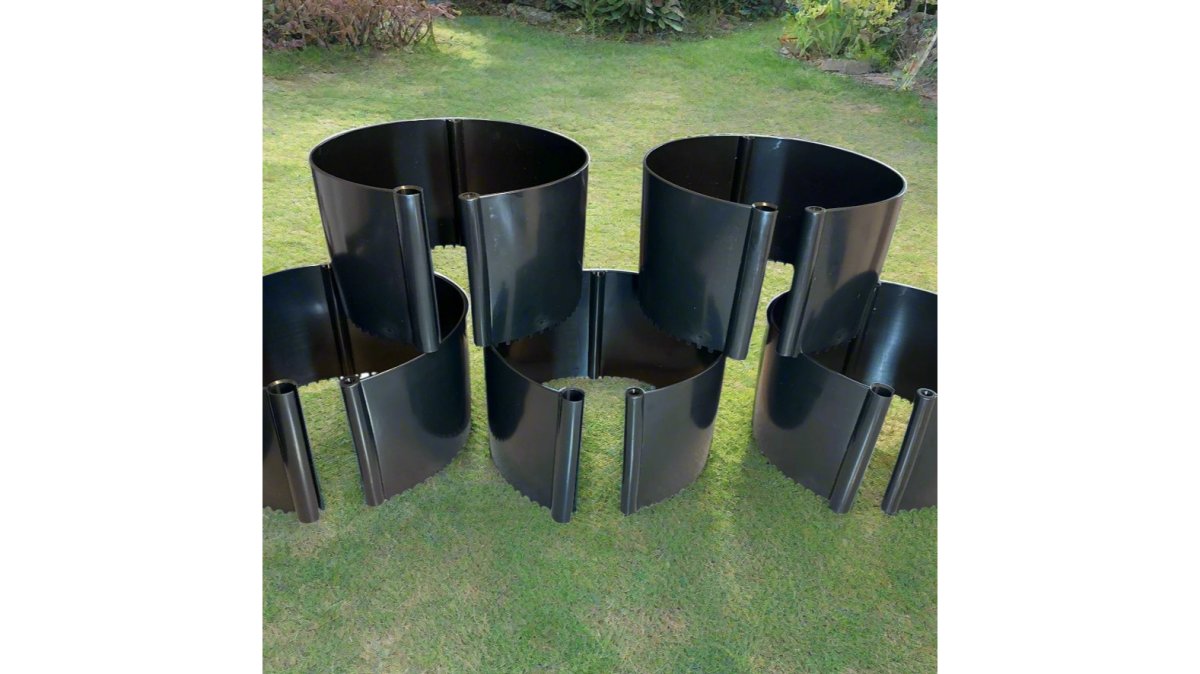
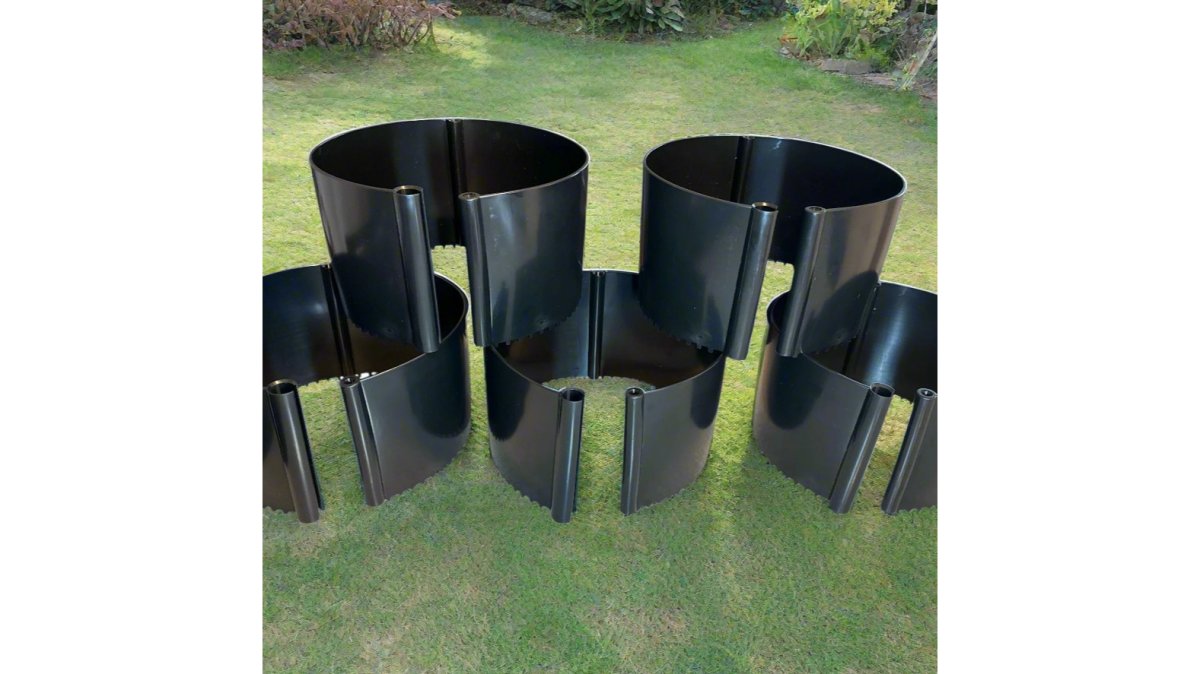
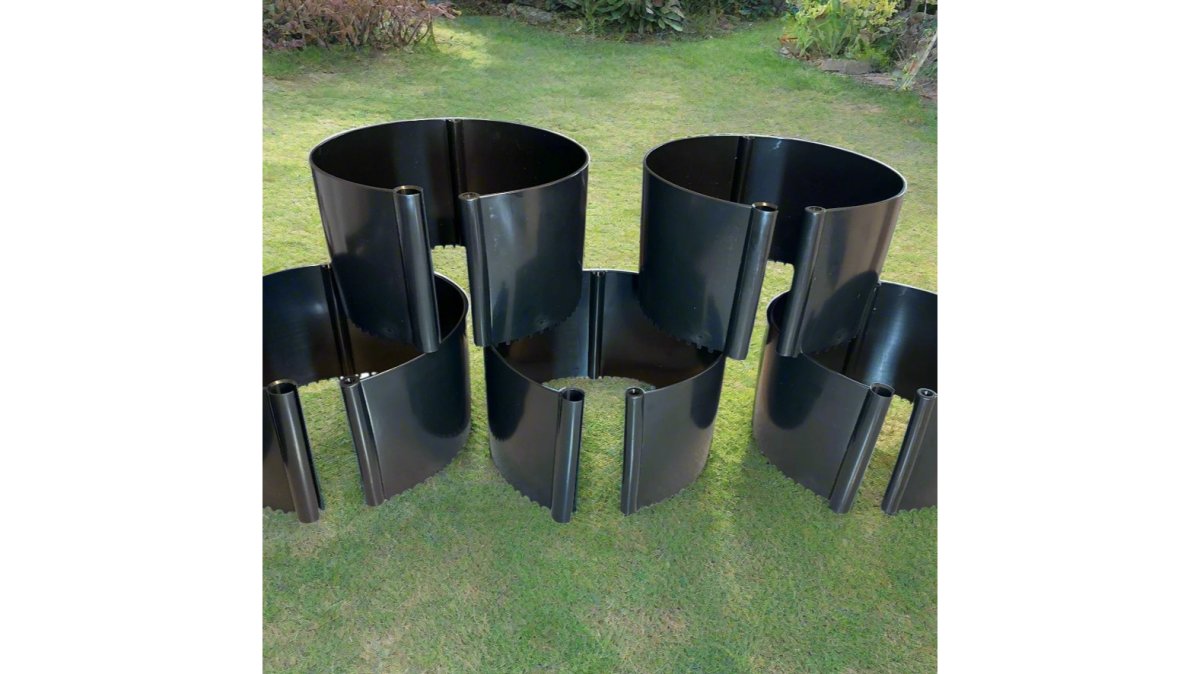
Watering rings and similar root-zone irrigation tools take the drip irrigation concept a step further by creating a physical barrier that holds water exactly where it's needed. The Garden Water Ring is a patented, American-made ring that sits around the base of each plant and holds up to 2 gallons of water, delivering it slowly and directly to the root zone instead of spreading it across the soil surface where it evaporates quickly.

The water-tight locking seal prevents runoff, even on sloped or uneven ground, and the ring's design shades the soil surface it surrounds, reducing evaporation. Because water is concentrated at the roots, the soil stays moist longer and you water less often.
For gardeners dealing with steep slopes where water runs right off, or those in dry climates watering constantly, this kind of targeted delivery makes a measurable difference. The ring also provides effective weed control by keeping the surrounding soil dry.
| Technique | How It Works | Best For | Effort Level |
|---|---|---|---|
| Mulching | Physical barrier shades soil, blocks capillary action | All gardens | Low |
| Early morning watering | Water soaks in before sun intensifies | All gardens | Low |
| Drip irrigation | Slow delivery to root zone | Larger beds, rows | Medium |
| Organic matter | Improves soil water-holding capacity | Sandy or clay soil | Medium |
| Shade cloth / windbreaks | Reduces evapotranspiration | Hot, exposed, or windy sites | Medium |
| Root-zone watering rings | Direct 2-gallon delivery, blocks runoff | Slopes, individual plants | Low |
Common Watering Mistakes That Waste Water
Even with the right techniques, a few habits can undermine your efforts to prevent water evaporation in vegetable gardens. The most common mistake is watering shallowly and frequently, which encourages shallow roots that dry out fast. Deep, less frequent watering trains roots to grow downward where soil stays moist longer.
Another frequent error is ignoring the soil surface. Bare soil between plants loses moisture rapidly, so consider planting densely or using a living mulch of low-growing plants to shade the ground. Finally, don't assume all plants need the same amount of water. Seedlings and newly transplanted vegetables need more frequent moisture, while established plants with deep root systems can go longer between waterings.
Keeping moisture in your vegetable garden comes down to protecting the soil surface, watering at the right time, and delivering water where roots can use it. Mulch, early morning irrigation, drip systems, organic soil, and micro-climate management all work together to reduce evaporation loss. For gardeners who want a durable, American-made solution that handles slopes and cuts watering frequency, the Garden Water Ring delivers water directly to the root zone with a weed-wacker-proof, weather-resistant design and a 30-day money-back guarantee. Get started with Garden Water Ring and grow a more productive garden with less water.
Frequently Asked Questions
What time of day is best to water a garden to minimize evaporation?
Early morning, ideally between 5 a.m. and 9 a.m., is the best time. The soil absorbs water before the sun gets intense, and foliage dries quickly, which helps prevent fungal diseases. Watering at midday can lose up to 30% of the water to evaporation before it reaches the roots. Evening watering works in a pinch, but leaves that stay wet overnight are more prone to mildew and rot.
How does the Garden Water Ring help maintain soil moisture?
The Garden Water Ring holds up to 2 gallons of water directly around the plant's root zone. Its design prevents runoff and blocks the soil surface from direct sun, which reduces evaporation loss. Water slowly seeps into the ground rather than pooling on top, so the root zone stays hydrated longer. This means you water less often, and the ring also suppresses weeds that compete for moisture.
What are the best mulching materials to prevent soil evaporation?
For vegetable gardens, straw, shredded leaves, grass clippings, and compost are excellent choices. Straw mulch is lightweight and breaks down slowly. Shredded leaves and grass clippings add organic matter as they decompose. Apply a 2 to 3 inch layer, keeping it a few inches away from plant stems to prevent rot. Avoid fresh wood chips, which can tie up nitrogen in the soil as they break down.
Does deep watering help reduce evaporation compared to frequent light watering?
Yes. Deep, infrequent watering encourages roots to grow downward, where the soil stays cooler and moisture evaporates more slowly. Frequent light watering keeps the top inch of soil wet, and that surface moisture evaporates quickly. Aim to soak the soil to a depth of 6 to 8 inches each time you water, then let the top inch dry out before watering again.

Leave a comment
This site is protected by hCaptcha and the hCaptcha Privacy Policy and Terms of Service apply.