Table of Contents
- Why Buy Root Zone Watering Rings in 2026
- Deep Root Irrigation Benefits for Vegetables and Trees
- How to Install Tree Watering Rings in Minutes
- Best Garden Watering Accessories 2026: What to Look For
- Watering Rings vs. Drip Irrigation and Soaker Hoses
- Soil Types, Clogging, and Smart Irrigation Integration
- Conclusion
- Frequently Asked Questions
Last Updated: September 10, 2026
Why Buy Root Zone Watering Rings in 2026
If you're looking to buy root zone watering rings in 2026, you're joining gardeners tired of watching water and money run off their beds. At Garden Water Ring, gardeners want a simple, tool-free way to deliver water exactly where plants need it, without a full drip system.
Overhead watering loses much of every gallon to evaporation and runoff before it reaches a plant's roots, and on slopes the loss is worse. A root zone watering ring holds water in a reservoir directly over the root ball, then releases it slowly so it soaks straight down instead of spreading sideways.
It changes how often you water, how deep your roots grow, and how much of your garden turns into weeds. Below: the benefits, installation, and how rings compare to drip lines and soaker hoses.
Deep Root Irrigation Benefits for Vegetables and Trees
Deep root irrigation delivers water below the soil surface, or directly to the root zone, so moisture penetrates deeper instead of pooling and evaporating on top. For vegetables and young trees, that encourages roots to grow downward rather than spreading shallow and wide.
Water Savings and Runoff Prevention
The biggest gain from deep root watering is water retention. When water sits in a basin and soaks in slowly, less escapes as runoff and less evaporates. On a slope, where surface watering sheets away, a ring keeps the water pooled until the soil absorbs it.
Many gardeners water less often, not because plants need less, but because more of each watering reaches the roots. That's the difference between watering the plant and watering the dirt around it.
Stronger Roots and Healthier Plants
Deeper moisture produces deeper roots. Plants watered at depth develop larger root systems and resist hot, dry stretches better. Shallow watering trains roots to stay near the surface, where they dry out fastest.
For tomatoes, peppers, squash, and cucumbers, this matters most during flowering and fruiting, when water stress directly affects yield and fruit quality.
How to Install Tree Watering Rings in Minutes
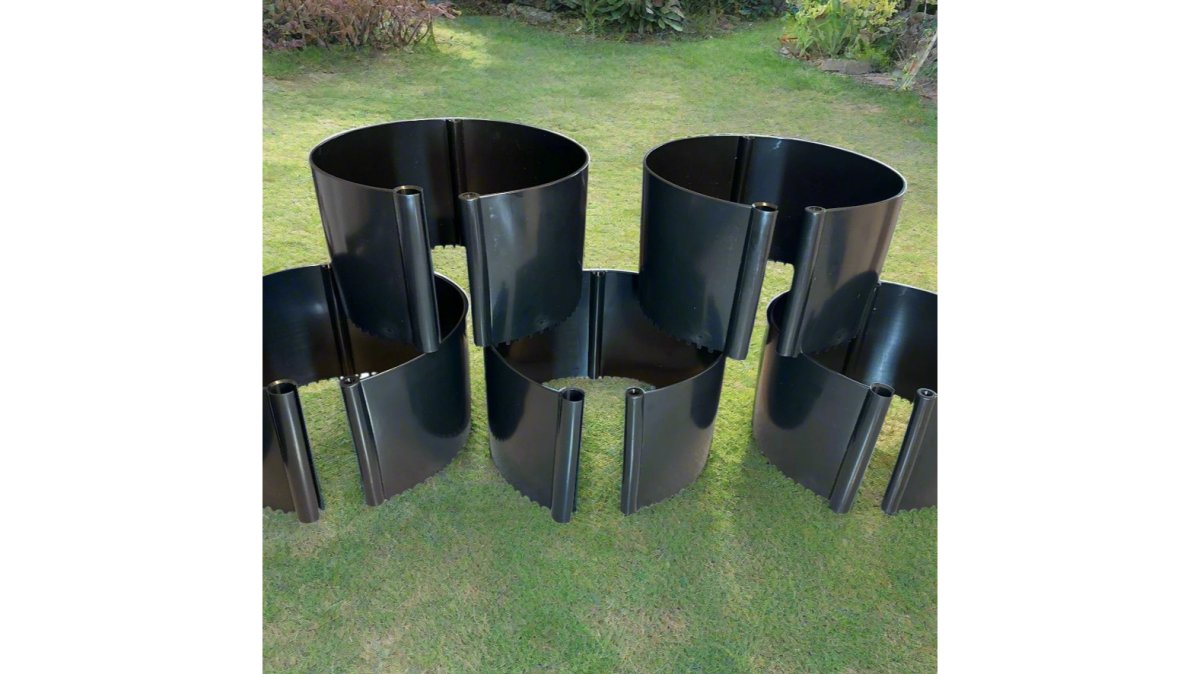
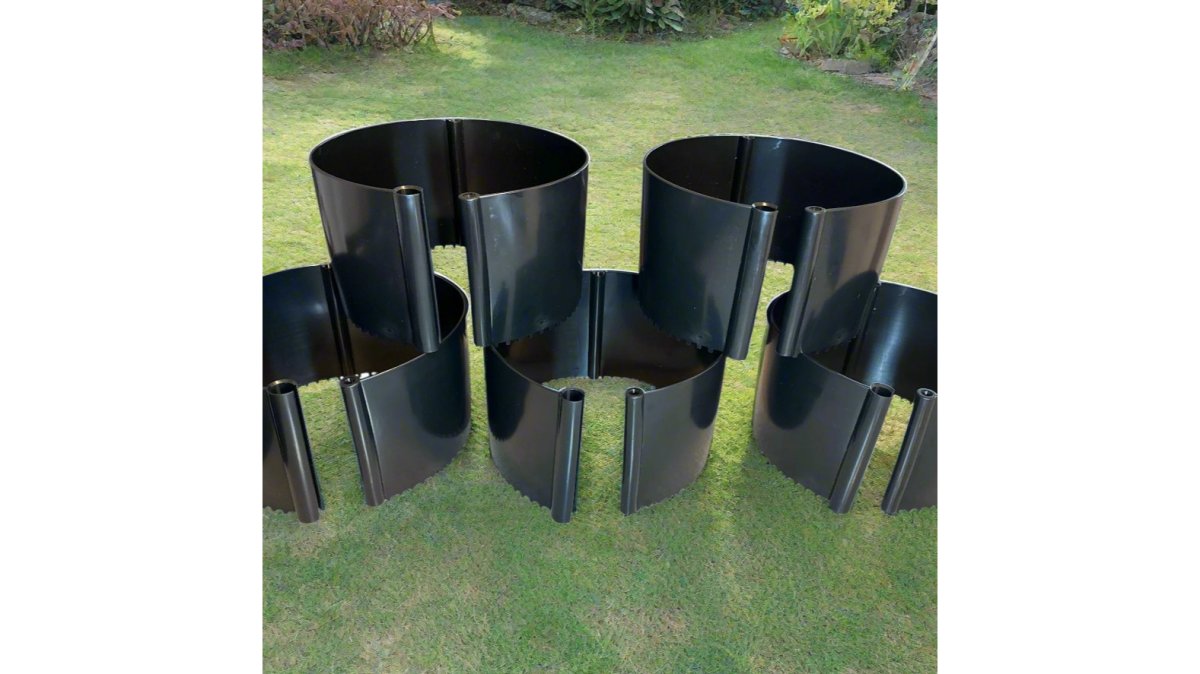
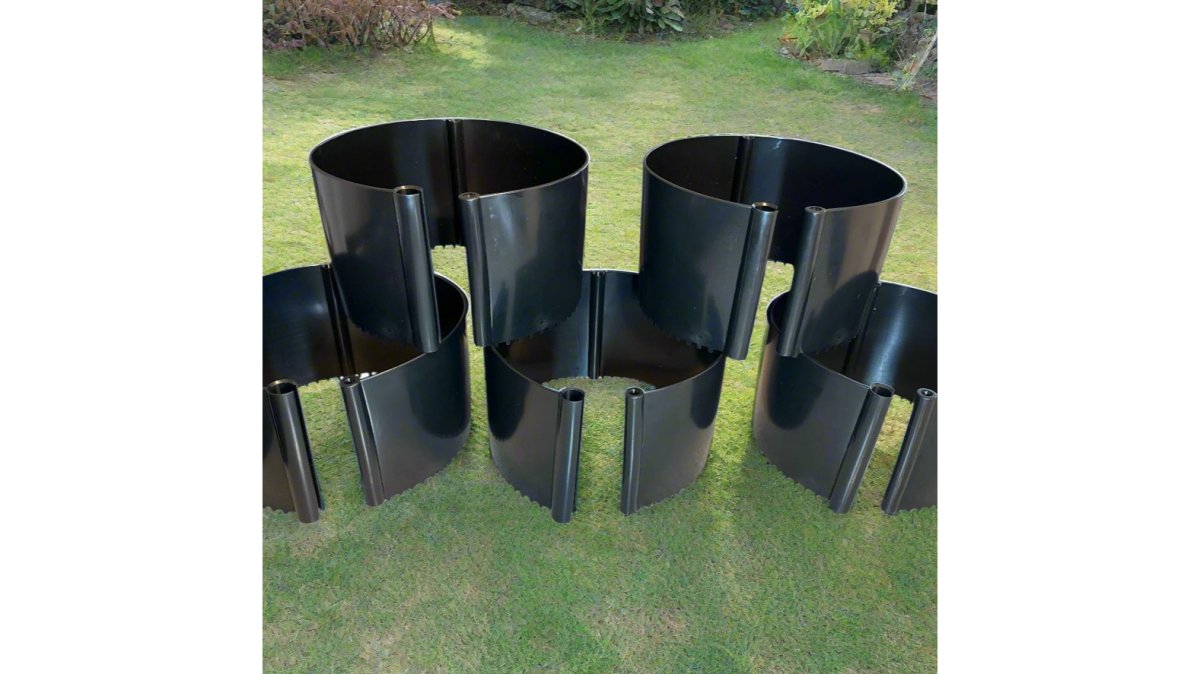
Installing a tree watering ring takes minutes and no tools. Place the ring around the plant's base, press the holding spikes into the soil, connect the locking seal into a closed circle, and fill with water. It then seeps out slowly into the root zone.
Here's the basic process:
- Position the ring around the plant's base, centered over the root zone.
- Press the two holding spikes into the soil to secure it.
- Connect the locking seal so the ring forms a closed circle.
- Fill with water and let it soak in slowly.
- Refill when the soil beneath feels dry a few inches down.
Placement on Slopes and Raised Beds
On sloped ground, set the ring so the low side sits slightly lower, letting water pool evenly instead of spilling off the high edge. In raised beds it works the same way, but expect more frequent refills until plants establish deeper roots.
Best Garden Watering Accessories 2026: What to Look For
The best garden watering accessories in 2026 deliver water to the root zone, resist sun and weather damage, and need no plumbing. When comparing watering rings, focus on capacity, durability, and how well the ring holds its shape on uneven ground.
| Feature | What to Look For | Why It Matters |
|---|---|---|
| Water capacity | Holds up to 2 gallons | Fewer refills, deeper soak |
| Material | Virgin polypropylene plastic | Resists cracking in sun and frost |
| Shape | Rigid, one-piece circle | Holds form on slopes and uneven beds |
| Anchoring | Integrated holding spikes | Stays put in wind and rain |
| Seal | Water-tight locking seal | No leaks at the connection point |
More capacity means fewer refills; a rigid ring keeps working after a season in the sun instead of warping or splitting. The Garden Water Ring, for example, is a 10-inch circle with a 6-inch height, made in the USA from virgin polypropylene with a water-tight locking seal and two holding spikes.
How to Size a Ring to the Plant, Not the Bed
Most buyers get this wrong: they size the ring to the bed instead of the plant's root ball. A ring should sit just outside the drip line, the outer edge of the leaf canopy, so water lands over the feeder roots rather than the stem. A 10-inch ring is generous for a 4-inch-pot transplant; for a two-year-old shrub with a 24-inch canopy, step up to a larger ring or move the same ring outward as the plant grows.
A practical rule: the ring's diameter should be roughly one-half to two-thirds of the canopy width. An 18-inch canopy fits a 10- to 12-inch ring; a 36-inch canopy needs two rings on opposite sides of the trunk or a larger-diameter unit.
Capacity Math: How Many Gallons Per Plant Per Week
Capacity is not just about refill frequency, it is about how deep the water penetrates. A 2-gallon ring emptied slowly into a 10-inch circle wets roughly the top 6 to 8 inches of loamy soil: enough for most vegetables and young trees, but not the 12- to 18-inch depth established trees rely on.
In loam, vegetables in peak summer typically need one 2-gallon fill every two to three days; young trees in their first two seasons, two fills per week. These are starting points, check the soil a few inches down before the next fill rather than watering on a fixed calendar.
Durability Signals That Actually Predict Lifespan
Ignore "heavy duty" marketing language and look for three concrete signals:
- Wall thickness. Thicker walls resist cracking when dropped, stepped on, or frozen; thin walls split at the seam first.
- UV stabilization. Non-UV-stabilized polypropylene chalks and turns brittle after one or two summers in direct sun. Virgin (not recycled) polypropylene holds up better.
- One-piece construction. Glued or snap-fit seams leak at the joint; a single molded piece has no seam to fail.
What to Skip
- Rings with tiny emitter holes. These clog in hard-water areas and are hard to clear; an open reservoir with a slow seep edge has no small orifices to plug.
- Rings without anchoring. On a slope or in wind, an unanchored ring tips and dumps its water in one spot.
- Rings sized for a single season. If the plastic goes chalky by August, you'll be buying again next spring.
Watering Rings vs. Drip Irrigation and Soaker Hoses
Rings, drip irrigation, and soaker hoses all deliver water at the root zone, but suit different gardens. Drip excels in large permanent beds with many plants on one line; soaker hoses suit rows and dense plantings; rings win for individual plants, especially on slopes or in small beds where tubing isn't practical.
| Method | Best For | Setup | Slope Performance |
|---|---|---|---|
| Watering ring | Individual plants, raised beds | No tools, minutes | Holds water in place |
| Drip irrigation | Large permanent beds | Tubing and fittings | Good with emitters |
| Soaker hose | Rows and dense plantings | Lay and connect | Moderate |
If your drip irrigation works, there's little reason to rip it out. But for a single tomato plant on a slope, or a small raised bed where tubing is overkill, a ring is faster to set up and easier to move.
Soil Types, Clogging, and Smart Irrigation Integration
Soil type, mineral buildup, and controller timing each change how a ring performs, and product pages rarely cover them. Here is the practical version.
Soil Type Changes Everything About Fill Rate
The same ring behaves differently in clay, loam, and sand. The variable is infiltration rate, how fast water moves through the soil surface.
| Soil Type | Infiltration Behavior | How to Fill a Ring |
|---|---|---|
| Clay | Absorbs slowly; can pond for hours | Fill in two or three short pours, 10-15 minutes apart |
| Loam | Absorbs steadily; ideal for slow release | One fill, let it soak, refill when dry below |
| Sandy | Drains fast; water can pass below roots | Fill, then refill sooner; consider amending with compost |
| Compacted | Rejects water at the surface | Loosen the top 2-3 inches before installing the ring |
In clay, the failure mode is pooling: two gallons can sit on the surface for an hour before soaking in, so split the fill. In sand, water moves down so fast it can slip past the shallow root zone; amend with compost or a moisture-holding material and refill more often.
A quick field test before you install: dig a small hole 6 inches deep near the planting site, fill it with water, and time how long it takes to drain. Under 10 minutes suggests sandy soil. Over an hour suggests heavy clay. In between is loam.
Clogging and Mineral Buildup: What Actually Happens
One advantage of a reservoir-style ring over drip irrigation is that it has no small emitters to plug. Drip lines in hard-water areas accumulate calcium and magnesium scale inside tubing and at each emitter, cleared only by flushing lines or soaking emitters in vinegar. A ring with an open basin and a slow-release edge has far fewer narrow passages to foul.
That doesn't mean zero maintenance. Two things still happen over a season:
- Surface film and algae. Standing water in a sun-warmed basin can grow a thin film of algae or mold. Rinse the interior with a garden hose at the start of the season and again mid-summer.
- Sediment and mulch intrusion. Soil, mulch, and grass clippings can block the seep edge. Tip the ring out, rinse it, and clear debris from the release channel.
A simple seasonal routine: at spring startup, rinse the ring, check the seal for cracks, and confirm the spikes are attached. Mid-season, check for algae or debris. At fall cleanup, store rings out of direct sun where UV is intense.
Integrating Rings With Smart Controllers and Timers
A watering ring is not a replacement for a smart controller, it is a placement tool that works alongside one. The controller decides when and how long to run; the ring decides where the water lands and how slowly it soaks in.
The practical setup: group plants with similar water needs into a hydro-zone, run that zone on a smart controller or hose timer, and place a ring at each plant to hold the water over the root zone instead of letting it sheet off. This matters most on slopes, where a 10-minute zone run can lose most of its water to runoff.
Two timing adjustments make rings work better with automated systems:
- Cycle and soak. Run the zone in two or three short cycles rather than one long one. The first wets the surface, the second soaks deeper, and the ring keeps both from running off. Many smart controllers have this setting built in.
- Match run time to soil, not to the plant. Clay zones need shorter, more frequent cycles; sandy zones need longer, less frequent ones. The ring doesn't change this, it just keeps the delivered water where it lands.
If you're not ready for a full smart controller, a basic battery hose timer on a single spigot gets most of the benefit: run it in the early morning, split the cycle, and let the rings hold the water at each plant.
Conclusion
Getting water to the root zone, instead of watching it run off, improves plant health and cuts water waste at the same time. Whether you're on a slope, in a raised bed, or just tired of watering constantly, a ring makes the job simpler.
Garden Water Ring is built for exactly this: a patented, USA-manufactured, one-piece design that holds up to 2 gallons, anchors with two holding spikes, and seals water-tight so nothing leaks at the connection. It's weed-wacker proof and works on sloped or uneven ground. Every ring comes with a 30-day money-back guarantee, and with Free Shipping!!!, there's no extra cost to get started.

Get started with Garden Water Ring and give your plants water that actually reaches their roots. SHOP NOW
Frequently Asked Questions
Do root zone watering rings actually work for trees?
Yes. Root zone watering rings deliver water directly to the root zone, so more moisture reaches the roots instead of running off the surface. This is especially useful for young trees and shrubs that need consistent deep watering to establish strong roots. The ring holds water in place while it soaks in slowly, which reduces evaporation and runoff. Gardeners growing tomatoes, peppers, and other vegetables see similar benefits because the water goes where roots can actually use it.
What is the benefit of using a root zone watering system?
A root zone watering system concentrates water and nutrients at the base of each plant rather than spraying a whole bed. That means less waste from evaporation and runoff, fewer weeds between rows since surrounding soil stays drier, and deeper root development because water soaks down instead of spreading sideways. Many gardeners also water less often because each session delivers more usable moisture. For sloped ground, a ring with a locking seal keeps water from draining away before it can soak in.
How do you install root zone watering rings?
Installation takes minutes and needs no tools. Place the ring around the base of your plant, press the holding spikes into the soil to keep it steady, and fill with water. For trees and shrubs, position the ring so the trunk sits in the center and the ring sits slightly below the canopy edge. On slopes, seat the ring firmly so the seal faces uphill. Fill slowly the first few times so the soil can absorb water without pooling. Refill as needed during dry spells.
Are root zone watering rings effective for sloped terrain?
They can be, provided the ring has a water-tight locking seal that keeps water contained while it soaks in. On a slope, water applied to bare soil tends to run downhill before roots can absorb it. A ring with a sealed base holds the water in place long enough for gravity to pull it down into the root zone. Press the holding spikes in firmly so the ring does not shift, and water in smaller amounts more often if the slope is steep.

Leave a comment
This site is protected by hCaptcha and the hCaptcha Privacy Policy and Terms of Service apply.