Table of Contents
- Why Thirsty Vegetable Gardens Waste So Much Water
- Hack 1: Water Deeply and Slowly at the Root Zone
- Hack 2: Time Your Watering Right
- Hack 3: Mulch to Slow Evaporation in Hot Weather
- Hack 4: DIY Slow-Watering With Ollas, Bottles, and Wicking
- Hack 5: Use a Root-Zone Watering Ring for Thirsty Plants
- How Often to Water a Vegetable Garden
- Building a Simple Vegetable Garden Watering Schedule
- Frequently Asked Questions
Last Updated: October 6, 2026
Why Thirsty Vegetable Gardens Waste So Much Water
Most garden water never reaches a plant's roots. It runs off the surface, pools between rows, or evaporates before the roots can drink.
This guide from Garden Water Ring covers five practical hacks that put water where it counts. Each one is simple, low-cost, and built for real vegetable beds.

Watering thirsty vegetable gardens is the practice of delivering water slowly and deeply to the root zone, so plants absorb more and waste less. The goal is not more water. It is better-placed water.
A few habits cause most of the waste:
- Sprinklers spray foliage, and much of it evaporates mid-air
- Fast watering puddles and runs off before soaking in
- Shallow watering trains roots to stay near the surface
- Bare soil bakes in the sun and loses moisture fast
Fix those four and a garden needs far less water for better results.
Hack 1: Water Deeply and Slowly at the Root Zone
Deep, slow watering beats frequent light watering every time. It pushes moisture 6 to 8 inches down, where roots grow strong and soil holds water longer.
Fast water is the enemy here. When a hose dumps water quickly, the soil surface saturates and the rest runs off. Slow delivery gives soil time to absorb.
Try these methods:
- Set a hose to a trickle and move it around the bed
- Water in two short passes instead of one long soak
- Aim at the plant base, not the leaves
- Let the first pass soak in, then add the second
Watering at the soil level also keeps foliage dry. Wet leaves invite disease, and dry leaves do not.
How to Tell When Vegetables Actually Need Water
Stick a finger 2 inches into the soil. If it feels dry at that depth, it is time to water. If it feels cool and damp, wait a day.
Other signals that vegetables need water:
- Leaves droop in the early morning, not just at midday
- The soil surface is cracked and pale
- New growth looks small or slow
- Squash and cucumber leaves wilt by mid-morning
Midday wilting alone is normal. Plants often recover by evening. Morning wilt is the real warning sign.
Hack 2: Time Your Watering Right
Early morning is the best time to water vegetable plants. Soil is cool, winds are calm, and plants have all day to drink before the heat arrives.
Watering at midday loses a large share to evaporation. Evening watering works, but wet foliage overnight can encourage fungal problems.
A simple rule:
- Water between 6 and 10 a.m. when possible
- If mornings are impossible, water in late afternoon
- Avoid the hottest hours, roughly 11 a.m. to 4 p.m.
- Water the soil, never the leaves
On cloudy, cool days, plants need less. On hot, windy days, check the soil more often.
Hack 3: Mulch to Slow Evaporation in Hot Weather
Mulch is the cheapest water-saving tool in the garden. A 2 to 3 inch layer of straw, shredded leaves, or grass clippings slows evaporation and keeps soil cool.
Mulch does three jobs at once:
- Holds moisture in the soil
- Blocks sunlight that dries the surface
- Suppresses weeds that steal water
Keep mulch a couple of inches away from plant stems. Piled mulch against stems can trap moisture and cause rot.
According to University of Minnesota Extension guidance on mulching gardens, organic mulches conserve soil moisture and moderate soil temperature. Both matter in hot, dry weather.
Reapply mulch through the season as it breaks down. A thin layer does little. Depth is what saves water.
Hack 4: DIY Slow-Watering With Ollas, Bottles, and Wicking
Slow-watering tools deliver moisture over hours instead of minutes, so soil has time to absorb water instead of shedding it.
Ollas are unglazed clay pots buried to the neck, with the rim left just above the soil line and a lid or saucer on top to block mosquitoes and debris. Fill the olla and water seeps through the porous clay into the surrounding soil.
Plastic bottles are the fastest DIY fix. Puncture small holes in the cap or along the lower sides, fill the bottle, and bury it neck-down near the plant so only the top few inches sit above the surface.
Wicking systems use a fabric strip, cotton rope, or nylon cord to pull water from a reservoir into the soil by capillary action. Wicking shines in containers and raised beds because the reservoir sits below the soil and gravity plus capillary pull do the work.
Quick comparison:
| Method | Setup Effort | Refill Frequency | Best For |
|---|---|---|---|
| Olla | Moderate | Every 3-5 days | Dry climates, deep roots |
| Plastic bottle | Low | Every 1-2 days | Small beds, single plants |
| Wicking | Moderate | Weekly | Containers, raised beds |
Troubleshooting DIY Slow-Watering
Even simple systems fail in predictable ways. A few fixes cover most of them:
- Olla seeps too slowly: the clay may be glazed or the soil around it is compacted. Refill with cool water and loosen the surrounding soil gently.
- Bottle empties in an hour: the holes are too large. Replace the cap or re-punch with a thinner needle.
- Wick stops pulling: the reservoir ran dry and the fabric dried out. Re-soak the wick fully before refilling.
- Soil stays soggy around the device: you are refilling too often for the soil type. Clay holds water longer than sand, so stretch the interval.
These hacks cut watering trips, but they still release water into open soil, where some evaporates or spreads sideways.
Hack 5: Use a Root-Zone Watering Ring for Thirsty Plants
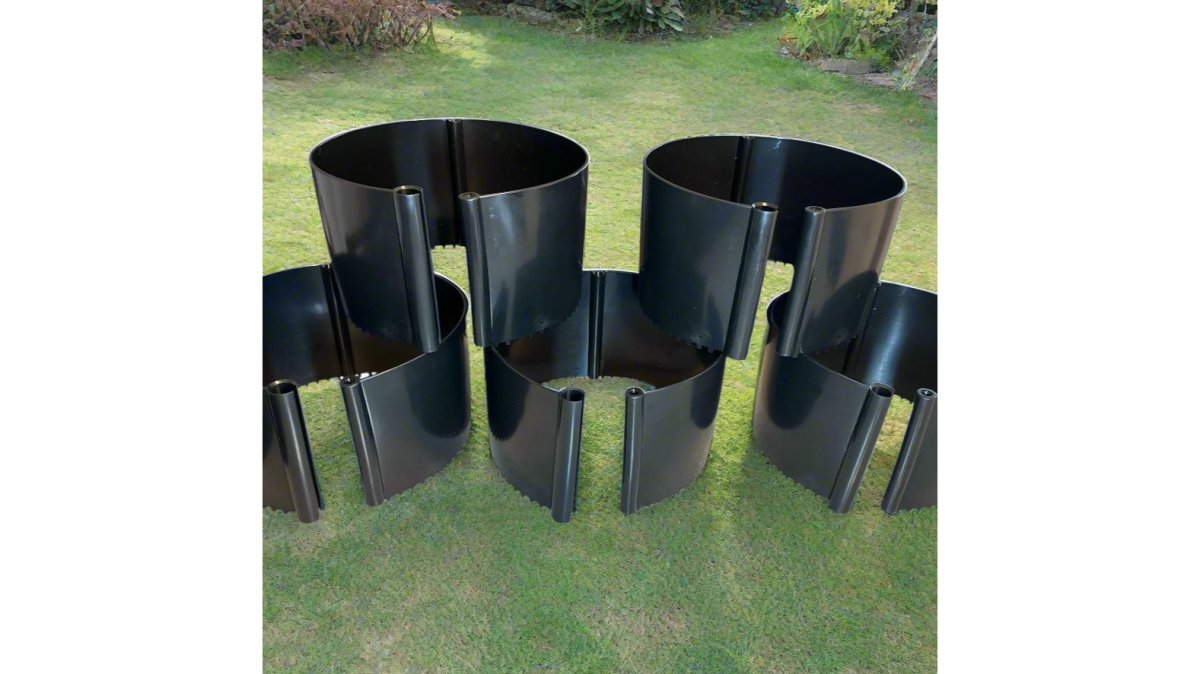
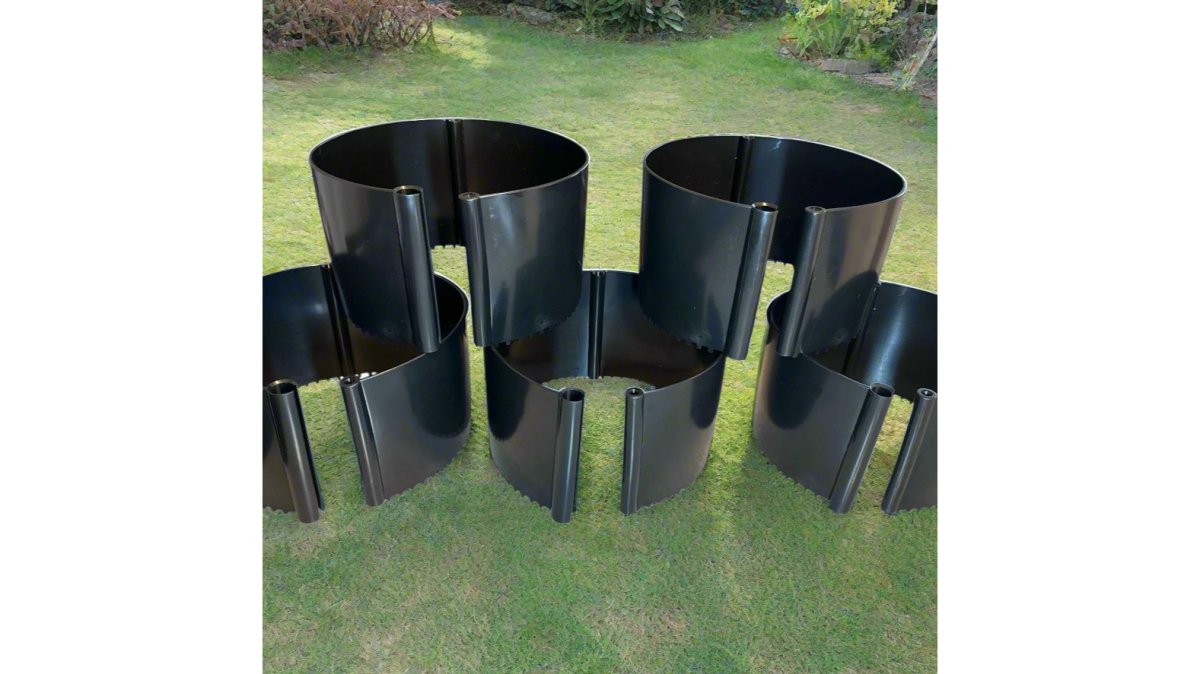
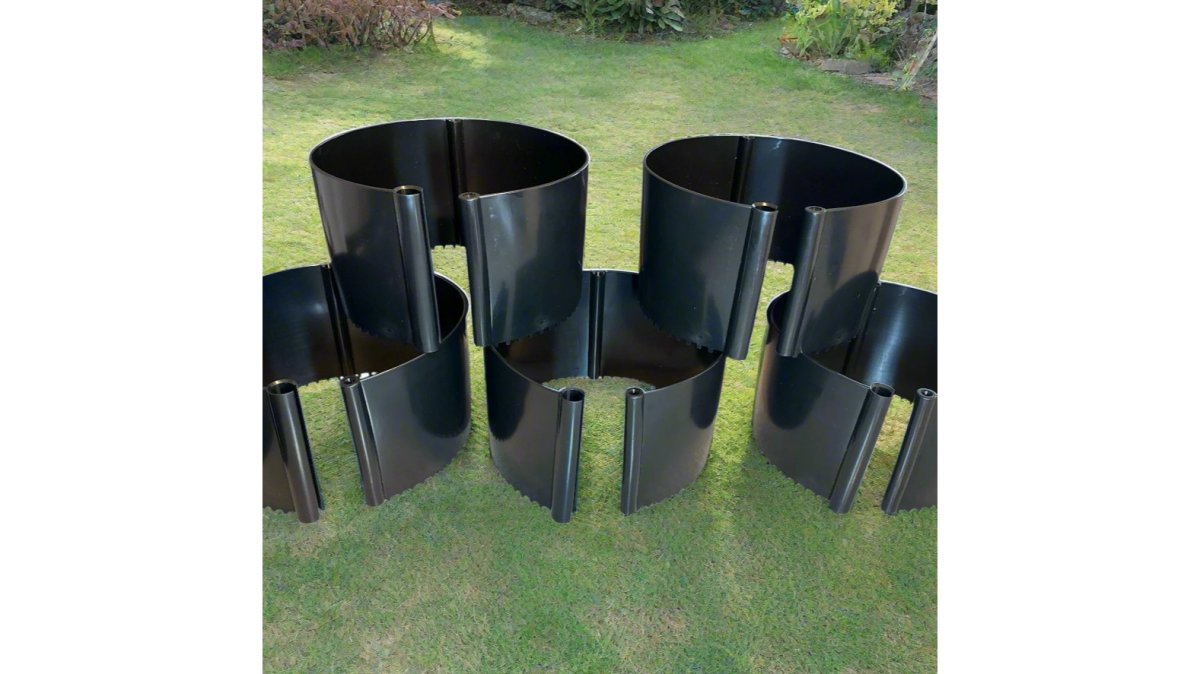
A root-zone watering ring holds water right at the plant base. The Garden Water Ring is a patented, reusable, USA-made option built for exactly this job.
The ring is one continuous piece. It opens and closes with a sliding male/female locking system, so it wraps around an existing plant without tools.
Two 11-inch holding spikes lock it in place. Press it about 2 inches into the soil with the teeth facing down.
How it helps:
- Concentrates water and fertilizer at the root zone
- Reduces runoff and evaporation
- Promotes deeper root development
- Cuts watering between plants
- Works on mild slopes
- Helps reduce weed growth
It is made from 100% virgin BPA-free, UV- and weather-resistant polypropylene. That means it stands up to summer sun and stores for winter reuse.
The ring holds water in place instead of letting it wander. For tomatoes, peppers, squash, and cucumbers, that means more of every gallon reaches the roots.
How Often to Water a Vegetable Garden
Most vegetable gardens need about 1 inch of water per week, from rain or watering combined. In hot, dry weather, that can rise to 2 inches. But "1 inch per week" is a starting point, not a rule, and the number that matters most is how deep that water actually reaches.
What 1 Inch Actually Means
One inch of water over one square foot is roughly 0.62 gallons. So a 4-by-8-foot bed needs about 20 gallons per week to hit the 1-inch target. That is the number to keep in mind when you are standing there with a hose, because eyeballing it usually undershoots. A tuna can or a short rain gauge set in the bed is the simplest way to confirm you have delivered an inch before you stop.
Adjust by Soil Type
Soil texture decides how often you water, not just how much:
- Sandy soil: drains fast and holds little. Water more often in smaller amounts, and expect to check every two days in summer.
- Clay soil: holds moisture tightly but absorbs slowly. Water slowly and less often, and watch for runoff if you pour too fast.
- Loam: the easiest to manage, roughly once or twice a week with a deep soak.
- Containers: dry out fastest of all. Check daily in hot weather, since a container has no surrounding soil to buffer it.
Adjust by Crop
Different vegetables have different root depths and water appetites:
- Shallow-rooted crops like lettuce, spinach, and radishes want frequent, light watering because their roots sit in the top few inches.
- Medium-rooted crops like beans, peas, and onions do well on a steady weekly soak.
- Deep-rooted crops like tomatoes, peppers, squash, and cucumbers reward slow, deep watering that pushes moisture 6 to 8 inches down.
Adjust by Weather
Heat, wind, and humidity all change the math. A hot, windy day can pull more water out of soil than a still, humid one at the same temperature. After a soaking rain, skip the next scheduled watering. During a heat wave, check the soil every two days instead of weekly.
Check the soil before every watering. If it is damp 2 inches down, skip it. If it is dry at that depth, water deeply.
The USDA Natural Resources Conservation Service notes that healthy soil holds more water, which is another reason to add organic matter each season. Organic matter improves both sandy and clay soils, so it is the single best long-term investment in a garden's water-holding capacity.
A Quick Way to Measure Delivery
Set a straight-sided can in the bed, turn on your watering method, and time how long it takes to collect an inch. That time is your target for every future watering. It removes the guesswork and makes the 1-inch rule something you can actually hit.
Building a Simple Vegetable Garden Watering Schedule
A vegetable garden watering schedule removes guesswork. Build one around your soil, your crops, and your local weather.
Start with a weekly target of 1 inch. Then adjust:
- Check soil moisture every two to three days
- Water deeply when the top 2 inches are dry
- Add extra water during heat waves and windy spells
- Cut back after rain
Track it on a calendar for two weeks. Patterns show up fast.
For gardeners reusing household water, safety comes first. The EPA guidance on reusing graywater advises using only mild soaps and avoiding water with grease, bleach, or harsh cleaners on food crops.
Pair a good schedule with a root-zone tool and the whole bed needs less attention. Garden Water Ring orders ship straight from the manufacturer, and free shipping in the USA makes it easy to set up a full bed in one afternoon.
Watering thirsty vegetable gardens comes down to placement and patience. Water slowly, water deeply, and keep moisture at the root zone instead of on the surface. Shop Garden Water Ring at Garden Water Ring to give every plant a steady drink at the roots.
Frequently Asked Questions
How can I tell when my vegetable garden needs water?
Push your finger about 2 inches into the soil near the plant base. If it feels dry at that depth, it is time to water. You can also watch for wilting or curling leaves in the early morning, which signals the plant is thirsty. A simple soil moisture meter gives a more precise reading. Checking soil moisture before watering prevents both underwatering and overwatering, which can harm root health.
What is the best time to water vegetable plants?
Early morning is the best time to water vegetable plants. Cooler temperatures and calm air mean less water lost to evaporation, and foliage has time to dry before evening, which helps prevent disease. If you miss the morning window, late afternoon works as a backup, but avoid watering at night when soil stays wet too long and fungal problems are more likely.
Do I need a vegetable garden watering schedule, or can I just water when I remember?
A simple vegetable garden watering schedule keeps plants healthier and saves water. Most vegetable crops need about 1 inch of water per week, from rain or watering combined. During hot, dry weather, check soil moisture every two to three days and water when the top 2 inches are dry. A schedule built around soil checks and weather beats guessing every time.
How does the Garden Water Ring help with deep watering a vegetable garden?
The Garden Water Ring holds up to 2 gallons and releases water slowly into the root zone, which encourages deep watering a vegetable garden. Its one-piece design installs about 2 inches into the soil with the teeth facing down and needs no tools. Water stays near the roots instead of running off, which helps on mild slopes and reduces evaporation between waterings.

Leave a comment
This site is protected by hCaptcha and the hCaptcha Privacy Policy and Terms of Service apply.