
Table of Contents
- Why Raised Beds Dry Out Faster (And What That Means for Watering)
- Best Watering Solutions for Raised Beds: A Quick Comparison
- How to Keep Garden Soil Moist Without Overwatering
- Drip Irrigation for Raised Beds: Emitters, Soaker Hoses, and Tubing Layout
- Raised Bed Watering Frequency: How Often Is Enough?
- Root-Zone Watering Rings: A Low-Tech Option That Saves Water
- Smart Controllers, Rainwater Harvesting, and Water Conservation Metrics
- Troubleshooting Uneven Water Distribution and Winterizing Your System
- Frequently Asked Questions
Last Updated: September 14, 2026
Why Raised Beds Dry Out Faster (And What That Means for Watering)
Raised beds lose moisture faster than in-ground gardens because they are exposed to air on all four sides, drain freely at the bottom, and warm up sooner in spring. That combination is great for root health and terrible for water retention. This guide from Garden Water Ring breaks down the best watering solutions for raised beds, from soaker hoses to drip emitters to low-tech root-zone rings.

The core problem is surface area. A raised bed has more exposed soil than the same footprint in the ground, so evaporation happens on the sides as well as the top. Shallow beds dry out even faster. Add wind, sun, and fast-draining potting mix, and you have a recipe for daily watering that most gardeners cannot sustain.
What most guides miss is that the fix is not more water. It is getting water to the root zone before it evaporates or runs off. That single principle separates the solutions that work from the ones that waste your time.
Best Watering Solutions for Raised Beds: A Quick Comparison
Here is how the main options stack up for raised beds. Each has a place, but they are not interchangeable.
| Solution | Setup Effort | Water Efficiency | Best For |
|---|---|---|---|
| Drip emitters | Moderate | High | Precise, automated watering |
| Soaker hoses | Low | Medium | Simple, low-cost coverage |
| Root-zone rings | None | High | Individual plants, slopes, beginners |
| Hand watering | None | Low | Small beds, quick touch-ups |
| Smart controllers | Moderate | High | Busy gardeners, seasonal shifts |
The best watering solutions for raised beds pair a delivery method with a controller or timer. The delivery method decides where water lands. The timer decides how often. Get both right and you cut waste substantially.
How to Keep Garden Soil Moist Without Overwatering
To keep garden soil moist without overwatering, water deeply and less often, then cover the soil surface to slow evaporation. Deep watering pushes roots downward. Frequent shallow watering trains roots to stay near the surface, where they dry out first and struggle in heat.
Two levers do most of the work: mulch and soil composition.
Mulching Techniques That Actually Hold Moisture
A 2-3 inch layer of organic mulch, such as straw, shredded leaves, or untreated wood chips, reduces surface evaporation and keeps soil temperatures steadier. Keep mulch a couple of inches away from plant stems to avoid rot.
- Straw: Cheap, easy to spread, breaks down slowly.
- Shredded leaves: Free, improves soil as they decompose.
- Compost: Feeds soil life while holding moisture.
- Wood chips: Long-lasting on paths and around perennials.
Any of these beats bare soil. Bare soil in full sun can lose moisture fast enough to undo a morning watering by mid-afternoon.
Soil Composition and Potting Mix Drainage
Raised bed soil needs to hold water and drain it. A common blend is roughly two parts topsoil, one part compost, and one part coarse material like perlite or aged bark. Pure potting mix drains too fast for large beds; heavy clay holds water but suffocates roots.
Check drainage by digging a small hole and filling it with water. If it drains within a few minutes, you are in good shape. If it sits for hours, add coarse material. If it vanishes instantly, work in more compost.
Drip Irrigation for Raised Beds: Emitters, Soaker Hoses, and Tubing Layout
Drip irrigation for raised beds delivers water slowly and directly to the root zone, which cuts evaporation and runoff compared with overhead watering. A basic setup includes a backflow preventer, a water pressure regulator, a filter, a manifold, and either drip emitters or a perforated soaker hose.
Tubing layout matters more than most people expect. Run lines along each bed, spacing emitters 12-18 inches apart for vegetables. For wider beds, use two parallel lines so the middle does not stay dry.
Soaker Hoses vs. Drip Emitters: Which Works Better in a Raised Bed?
Soaker hoses are cheaper and easier to lay out, but they clog over time and put out uneven flow, especially on sloped beds. Drip emitters cost more upfront and take longer to set up, but they deliver consistent, measurable flow at each plant.
For a small bed with similar plants, a soaker hose is fine. For mixed plantings, sloped beds, or anything you want to automate precisely, emitters win. Many gardeners run both: emitters for heavy feeders, a soaker line for leafy greens.
Raised Bed Watering Frequency: How Often Is Enough?
The baseline rule is about 1 inch of water per week, delivered in two or three deep sessions rather than daily sprinkles. In hot, dry, or windy conditions, that can rise to 1.5-2 inches. Push a finger two inches into the soil; if it is dry at that depth, water. But the baseline is only a starting point, the right frequency depends on what is growing and how deep its roots run.
Frequency by Plant Type
Different crops in the same bed want different moisture, which is why a single blanket schedule under-serves some plants and drowns others.
- Leafy greens (lettuce, spinach, kale). Shallow roots, constant demand. They prefer smaller, more frequent drinks and consistent moisture, let them dry out and they bolt. A soaker line or short drip cycles work well.
- Fruiting plants (tomatoes, peppers, eggplant). Deep, less frequent watering builds a strong root system and reduces blossom-end rot and cracking from moisture swings. Once established, one or two deep sessions a week usually beats daily sips.
- Root vegetables (carrots, beets, radishes). Even moisture prevents splitting and forking. Irregular watering is the main cause of cracked carrots, so keep the root zone steady rather than soaking and drying.
- Vining and sprawling crops (squash, cucumbers, melons). Large plants, large demand. They benefit from deep watering at the base and mulch to hold it, and they are the first to wilt when a cycle is missed.
A practical compromise for a mixed bed: run drip emitters sized to the thirstiest plants and use a soaker line for the greens, or split the bed into two zones on the same controller.
Adjusting for Growth Stage and Season
Water demand tracks plant size and weather, not the calendar alone.
- Seedlings and transplants need frequent, shallow watering until roots establish, often daily for the first week or two.
- Established plants shift to deeper, less frequent cycles.
- Cool spring weeks may need one watering; peak summer may need three; fall tapers back as days shorten.
A timer with seasonal adjustment removes the guesswork, and a rain sensor stops the system when the sky does the work for you. If you use a smart controller, set a minimum run time so a heat wave cannot trigger a skip that starves the bed.
Root-Zone Watering Rings: A Low-Tech Option That Saves Water
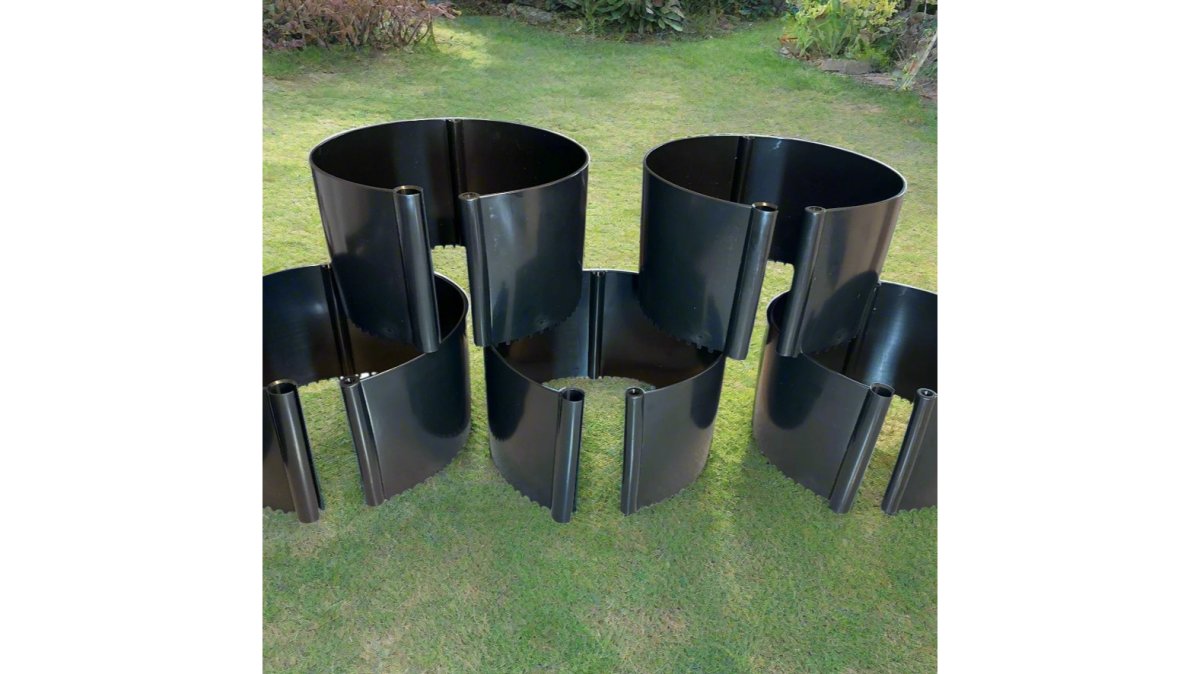
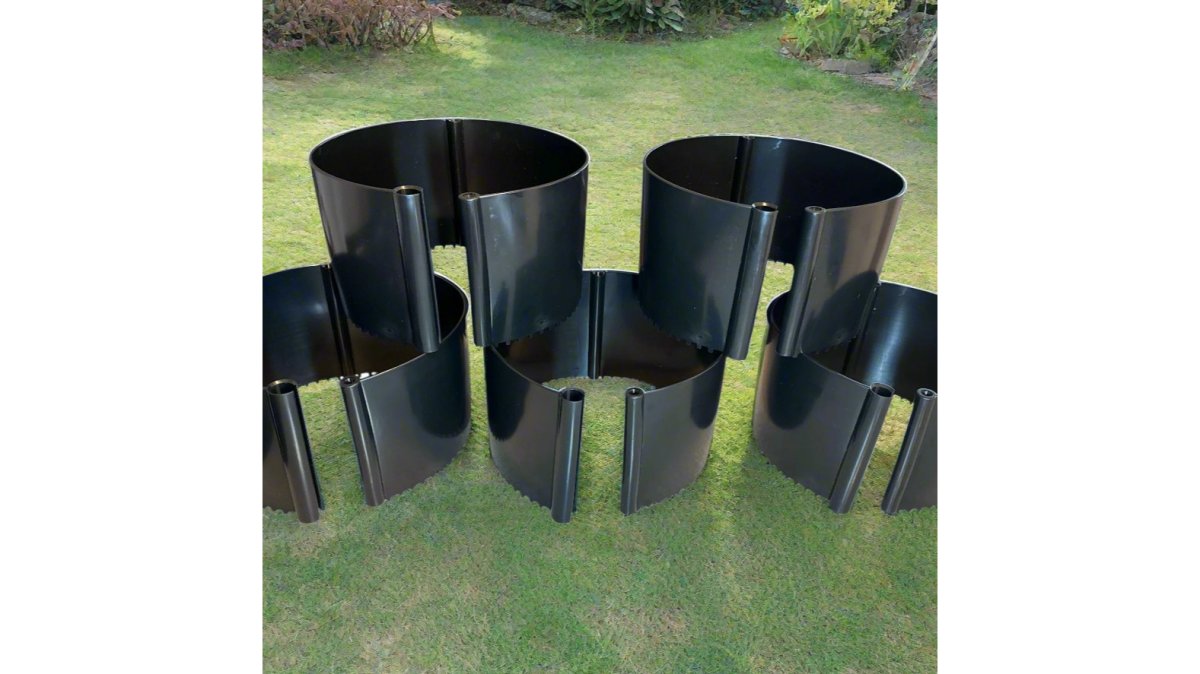
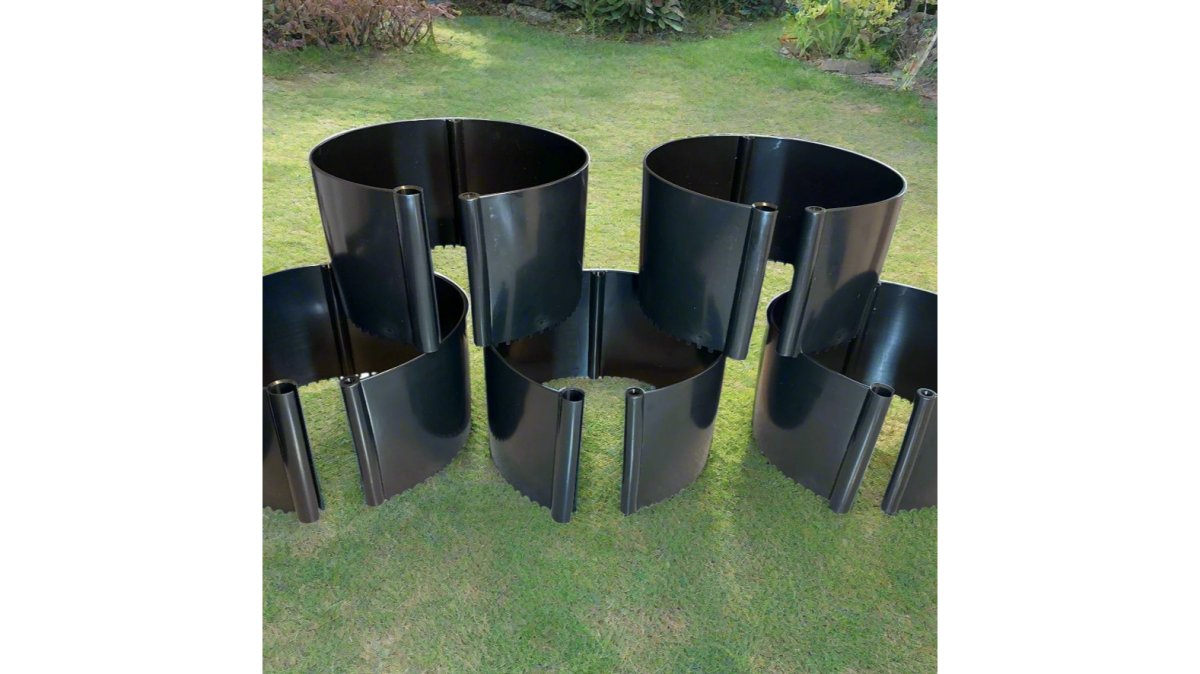
Root-zone watering rings concentrate water at the base of each plant instead of spreading it across the bed. The Garden Water Ring holds up to 2 gallons, releases it slowly into the soil, and keeps it there with a water-tight locking seal. Two 11-inch holding spikes anchor it, so it stays put on sloped or uneven ground.
For gardeners comparing watering rings, the practical difference is durability. A cheaper ring can crack after a season in the sun. The Garden Water Ring is made from virgin polypropylene, manufactured in the USA, and built to survive weed whackers and weather. It also doubles as weed control around the plant base.
Smart Controllers, Rainwater Harvesting, and Water Conservation Metrics
Most raised-bed guides stop at a mechanical hose timer. That leaves three high-value upgrades on the table: controllers that think for themselves, a rainwater supply that makes the whole system nearly free to run, and a simple way to prove the system is actually saving water.
How Smart Irrigation Controllers Actually Work
A smart controller replaces the fixed on/off schedule with a decision. Two common types dominate residential raised-bed setups:
- Weather-based (ET) controllers pull local evapotranspiration and rainfall data, from a built-in sensor, a subscription service, or a public weather network, and adjust run times to replace only the water the bed actually lost. The EPA WaterSense program labels weather-based irrigation controllers that meet its efficiency criteria, which is a useful shortcut when shopping.
- Soil-moisture-based controllers read a buried sensor and irrigate only when the root zone drops below a set threshold. They respond to real conditions rather than a forecast, which suits raised beds because their small soil volume swings fast.
Either type typically pairs with a rain sensor (skip a cycle after measurable rain) and, on better units, a flow meter that logs gallons used. App control over Wi-Fi or Bluetooth lets you pause a cycle from your phone when a storm rolls in, the single most useful feature for a gardener who is away from home during the day.
One caveat specific to raised beds: because the soil volume is small and drains freely, aggressive ET-based skipping can under-water in a heat wave. Set a minimum run time or a moisture floor so the controller cannot starve the bed.
Connecting Raised Beds to Rainwater Harvesting
A rain barrel turns a roof into a water source. The mechanics matter more than the barrel:
- Diverter and first flush. A downspout diverter sends water into the barrel and routes the first dirty rinse away. A first-flush device discards the initial runoff so roof grit and bird droppings do not reach your beds.
- Overflow. Every barrel needs an overflow that carries excess away from the foundation, not into it.
- Elevation or a pump. Gravity feed works for drip lines only if the barrel sits high enough to produce usable pressure, a few feet of head is often not enough for emitters. A small transfer pump solves this and lets you run a normal drip zone.
- Filtration. A filter or screen before the drip line keeps the debris that rain inevitably carries out of your emitters.
Sizing rule of thumb: a single 55-gallon barrel fills fast in a downpour and empties fast in a dry spell, so most gardeners run two or more, or a small cistern, to bridge between rains. Keep barrels covered to limit mosquitoes and algae.
Measuring Water Conservation
You do not need a study to know whether your setup is efficient, you need two numbers and a habit.
- Gallons per week. A flow meter on the spigot, or the controller's own log, gives you a running total. Compare a hand-watering week to a drip-plus-mulch week and the difference is usually obvious.
- Runoff events. Walk the beds after a cycle. If water is pooling or running off the sides, you are applying faster than the soil can absorb. Slower delivery, shorter cycles repeated, and mulch fix it.
The practical takeaway: a smart controller plus a rain barrel plus a flow meter converts "I think this is saving water" into a number you can watch drop.
Troubleshooting Uneven Water Distribution and Winterizing Your System
Uneven water usually comes down to pressure or layout. High pressure forces water out too fast; a water pressure regulator set low fixes it. Long runs lose pressure at the far end, so split them into shorter zones. Clogged emitters need a filter upstream and a periodic flush.
For winterization, drain every line before the first hard freeze. Open the end caps, blow out residual water with compressed air if you have it, and store timers and controllers indoors. Leave drip tubing in place but disconnected. A cracked manifold or split tubing in spring is almost always freeze damage you could have prevented.
Frequently Asked Questions
What is the most efficient way to water raised beds?
Root-zone delivery systems are the most efficient. Drip irrigation with pressure-compensating emitters, soaker hoses, and watering rings all put water directly at the plant base instead of spraying leaves and paths. This cuts evaporation and runoff significantly. A watering ring that holds up to 2 gallons and releases it slowly gives deep root hydration with almost no waste, which matters most in raised beds where soil dries faster than in-ground planting.
Should raised garden beds be watered every day?
Not usually. Most established vegetables in raised beds need about 1 inch of water per week, delivered deeply two or three times rather than lightly every day. Daily shallow watering encourages weak surface roots and wastes water. Check the top 2 to 3 inches of soil with your finger before watering. During heat waves or with thirsty crops like tomatoes and squash, you may need to water every other day, but let the soil tell you, not the calendar.
Does drip irrigation save water in raised beds?
Yes. Drip systems deliver water slowly to the root zone, so less is lost to evaporation and runoff than with overhead sprinklers. Adding a pressure regulator and a backflow preventer keeps flow consistent and protects your household supply. Pairing drip with mulch and a smart controller that adjusts for weather pushes savings further. For gardeners tracking water conservation metrics, drip typically uses 30 to 50 percent less water than sprinklers for the same crop.
How do you keep raised beds watered while on vacation?
Set up an automated timer on your drip system or soaker hoses before you leave, and test it for a few days first. Add a thick layer of mulch to slow evaporation. Watering rings that hold 2 gallons per plant can stretch the interval between waterings, especially for tomatoes and peppers. If you are gone longer than a week, ask a neighbor to check the system once, or use a smart controller you can adjust from your phone.
Raised beds reward gardeners who water smarter, not more often. The right combination of mulch, soil, and a delivery method that targets the root zone cuts waste and grows stronger plants. Garden Water Ring was built for exactly this: a patented, USA-made ring that holds 2 gallons, locks water in place, works on slopes, and controls weeds while it hydrates. Get started with Garden Water Ring and water less while your garden does more.

Leave a comment
This site is protected by hCaptcha and the hCaptcha Privacy Policy and Terms of Service apply.