
Table of Contents
- How Dry-Climate Water Loss Affects Tomato Plants
- Signs of Underwatering vs. Overwatering Tomatoes
- Deep Watering Techniques for Dry Climates
- Drip Irrigation for Tomato Gardens: Setup and Calibration
- Best Mulch for Tomatoes in Heat
- Signs of Tomato Blossom End Rot and How Watering Prevents It
- Micro-Climate Strategies: Containers, Slopes, and Soil Amendments
- Frequently Asked Questions
Last Updated: September 17, 2026
How Dry-Climate Water Loss Affects Tomato Plants
Watering tomato plants in dry climates fails for one reason: the atmosphere pulls moisture from the soil faster than the plant can replace it. This guide from Garden Water Ring explains how to keep the root zone hydrated when evaporation works against you.
Evapotranspiration, combined soil evaporation and plant transpiration, is the biggest factor separating a thriving tomato patch from a struggling one. In arid regions, surface watering barely reaches the root zone before it disappears.
Tomatoes have deep, aggressive root systems. Consistent moisture rewards you with heavy fruit set; a root zone swinging between bone-dry and saturated gives you cracked fruit, blossom drop, and a fraction of the harvest you planned for.
The USDA's drought and moisture guidance for home gardeners confirms that soil moisture management is the foundation of plant health in low-rainfall areas. Dry-climate gardeners cannot rely on rainfall timing.
Signs of Underwatering vs. Overwatering Tomatoes
Underwatered tomatoes wilt in the heat of the day and recover overnight; overwatered tomatoes stay wilted, yellow, and limp because their roots are suffocating. The fixes are opposite.
Underwatering symptoms:
- Leaves curl inward and feel crisp at the edges
- Wilting that reverses in the evening
- Dry, cracked soil pulling away from the container wall
- Slow, stunted new growth
Overwatering symptoms:
- Yellowing lower leaves that stay soft
- Wilting that does not recover overnight
- Soggy soil and standing water around the base
- Root rot smell in containers
Deep Watering Techniques for Dry Climates
Deep watering means saturating soil to 6 to 8 inches so roots grow downward instead of clustering at the surface. Shallow daily sprinkling creates shallow roots, which fail first when a dry spell hits.
A practical deep-watering routine for dry climates:
- Water early in the morning, before heat drives water evaporation.
- Apply water at the base of the plant, never on the leaves.
- Water slowly until the top 6 to 8 inches of soil are moist.
- Wait until the soil dries slightly before watering again.
- Mulch immediately to lock in what you just delivered.
Drip Irrigation for Tomato Gardens: Setup and Calibration
Drip irrigation for tomato gardens delivers water one drop at a time to the root zone, cutting evaporation loss to near zero, the most water-efficient method for dry climates.
Calibration steps:
- Run the system for 15 minutes and measure how far the water penetrates with a probe.
- Adjust run time until moisture reaches 6 to 8 inches deep.
- Check emitters for clogging at the start of each season.
- Set a timer, but verify with a moisture meter rather than trusting it blindly.
Best Mulch for Tomatoes in Heat
| Mulch Type | Water Retention | Best For | Watch Out For |
|---|---|---|---|
| Straw | High | In-ground beds | Can harbor slugs; blow-away in wind |
| Shredded leaves | High | Raised beds | Breaks down fast; may mat if wet |
| Grass clippings | Medium | Quick cover | Apply thin (1/2 inch) to avoid matting and rot |
| Pine bark | Medium | Perennial borders | Slow to decompose; can acidify over time |
| Compost | Medium | Soil building | Adds nutrients, not just cover |
| Shredded hardwood | High | Long-season beds | Coarse; slower to break down than straw |
Application rules that matter in dry climates:
- Wait until soil has warmed in late spring. Mulching cold soil traps moisture and chill, slowing early growth.
- Keep mulch 2 to 3 inches back from the stem to prevent crown rot and rodent damage.
- Water deeply before mulching, not after. Mulch locks in moisture; it does not create it.
- Replenish mid-season. A 2-inch layer can thin to 1 inch by midsummer as it decomposes.
- In windy, exposed beds, anchor straw with a light scatter of compost or a thin row of pine bark.
Combined with a ring or drip system, mulch stretches your watering interval noticeably when every gallon counts: the ring delivers water below the surface, and the mulch keeps it from escaping back into the air.
Signs of Tomato Blossom End Rot and How Watering Prevents It
Blossom end rot shows up as a dark, sunken, leathery patch on the bottom of the fruit. It is not a disease and not a soil deficiency. It is a calcium delivery problem caused by inconsistent watering.
Micro-Climate Strategies: Containers, Slopes, and Soil Amendments
Micro-climates change watering needs within a single yard. A south-facing bed against a wall can dry out twice as fast as the same plants in open ground, and containers dry fastest of all. The fix is matching the strategy to the zone, not one schedule.
Reading your micro-climate
Before changing anything, walk the garden at midday in peak summer and note which beds wilt first, which surfaces are hot to the touch, and where water pools or runs off after irrigation. Those observations tell you which zone you are in.
- High-desert zone (low humidity, intense sun, wide day-night temperature swing): evaporation is brutal, nights are cool. Water early, mulch heavily, and expect the shortest intervals.
- Mediterranean zone (dry summers, mild winters, some coastal humidity): evaporation is moderate but consistent. Deep, less frequent watering works well; watch for salt buildup in containers.
- Inland valley zone (hot days, warm nights, low wind): the warm nights are the problem, plants transpire around the clock, so overnight recovery is limited.
Containers
Container gardening in dry climates is the hardest case: containers have limited water-holding capacity, heat up fast, and lose moisture from every side, including the sides themselves, which radiate heat back into the root ball.
- A 5-gallon container in peak heat can lose its available moisture in a single day. A 15-gallon container may hold two days.
- Dark plastic pots run hotter than light-colored or fabric pots. If you use dark pots, shade the pot itself, not just the plant.
- Water until it runs from the drainage hole, then check with a moisture meter 6 inches down. If it still reads dry, the potting mix has gone hydrophobic and needs a slow, repeated soak.
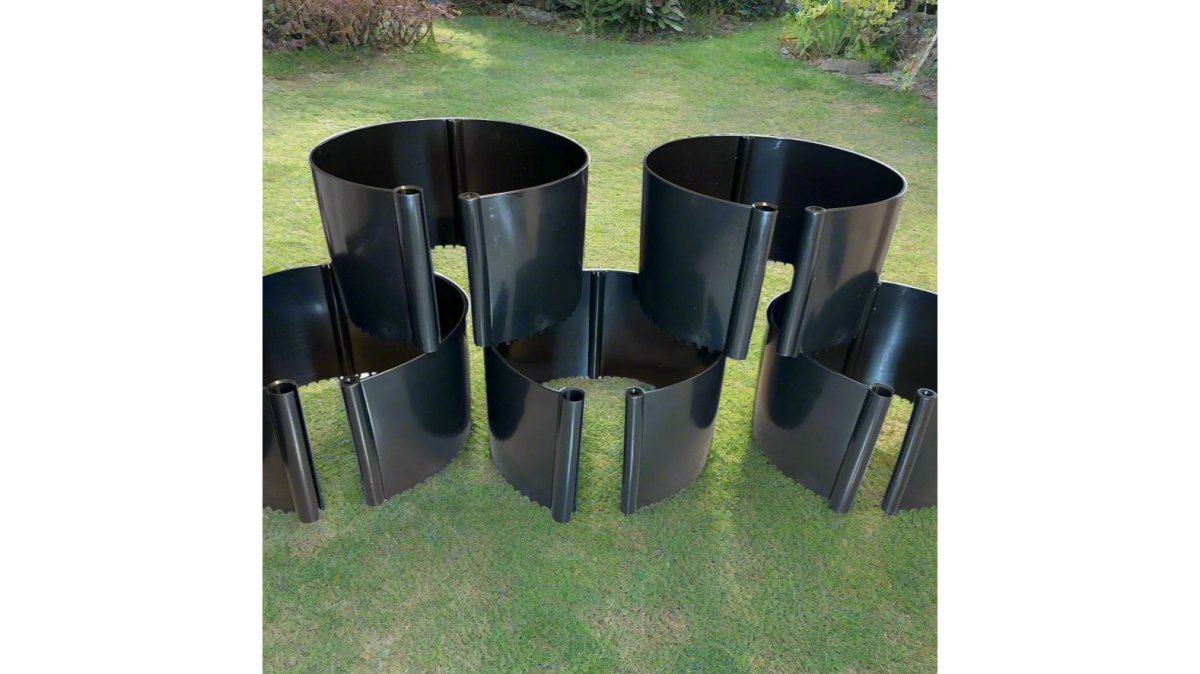
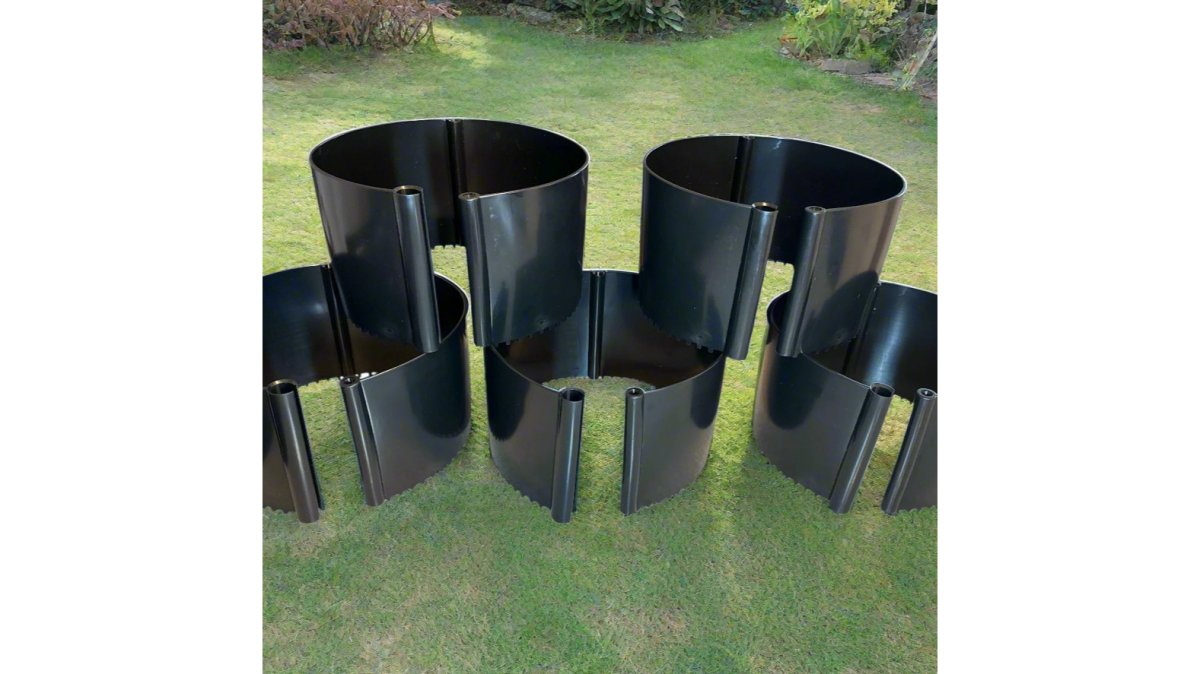
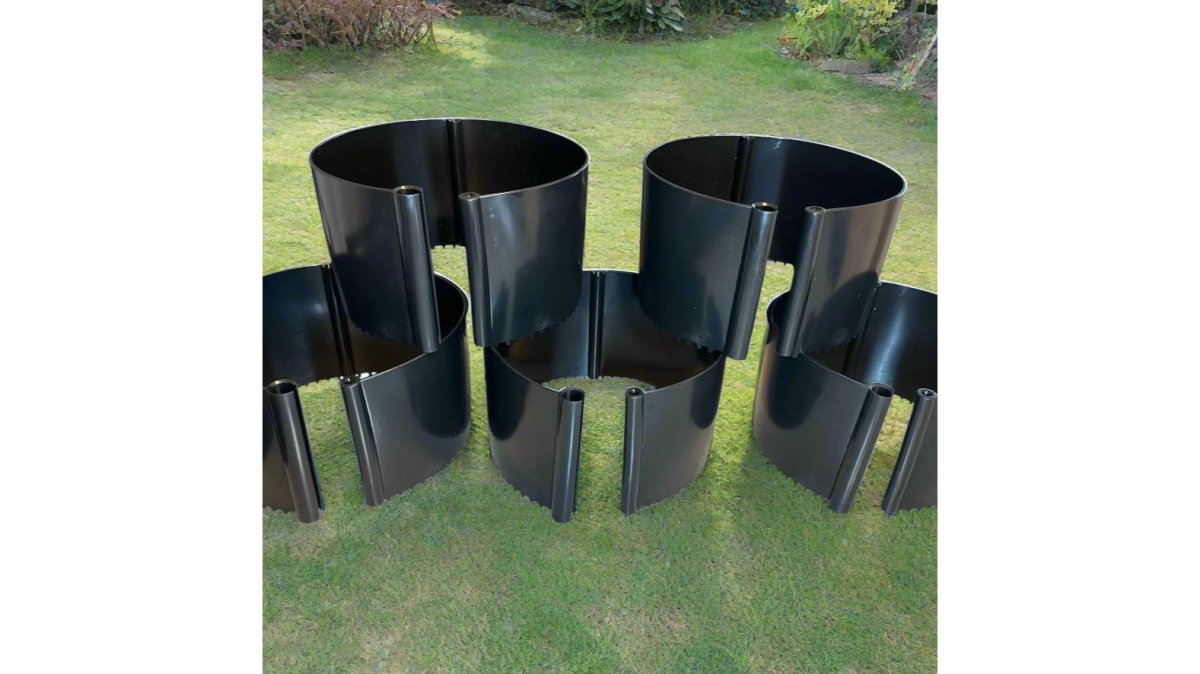
- Consider a ring sized to the pot. A 2-gallon reservoir released slowly beats a fast pour that channels down the sides.
Slopes
Slopes are the second challenge: gravity pulls water downhill before it soaks in, flooding plants at the bottom while those at the top stay dry. The Garden Water Ring holds water in place on sloped or uneven ground, letting it soak straight down instead of running off.
Two additional moves help on slopes:
- Build a small basin or berm on the downhill side of each plant to catch what would otherwise run past.
- Place emitters or rings on the uphill side of the stem so water migrates toward the root zone rather than away from it.
Soil amendment for water retention
- Compost is the simplest, most reliable amendment: work 2 to 4 inches into the top 6 to 8 inches of native soil. It improves both drainage and water-holding capacity, organic matter creates pore space that holds water and lets excess drain.
- Biochar is a slower, longer-lasting option. It is porous and holds water and nutrients in its structure, but it needs to be charged with compost or compost tea before use, raw biochar can temporarily tie up nutrients.
- Coconut coir is useful in containers and sandy beds. It holds several times its weight in water and resists compaction better than peat.
- Sandy soil benefits most from repeated compost additions over several seasons; a single pass will not fix a sandy profile.
One honest limitation: the ring is a fixed 10-inch circle, so it suits established plants and larger containers rather than seedlings in tiny pots. Match the tool to the plant size.
Frequently Asked Questions
How often should I water tomatoes in hot, dry weather?
In dry climates, water deeply every 2 to 3 days rather than lightly every day. Aim for 1 to 2 inches per week, adjusting for heat and wind. A moisture meter helps you check the root zone before watering. Tools like the Garden Water Ring hold up to 2 gallons and release it slowly, so you can stretch intervals to every 3 to 4 days once roots are established.
Should I let my tomato plants dry out between watering?
A slight dry-down of the top inch of soil is fine, but the root zone should stay consistently moist. Letting plants wilt severely between waterings causes blossom end rot and cracked fruit. Check soil at 6 inches deep; if it is dry there, water. Mulch and drip irrigation for tomato gardens help maintain even moisture without waterlogging.
What are the signs of tomato blossom end rot?
Blossom end rot shows as a sunken, dark brown or black patch on the bottom of the fruit. It is caused by calcium deficiency brought on by inconsistent watering, not by a lack of calcium in the soil. Keeping soil moisture steady with deep irrigation and mulch prevents the condition. Remove affected fruit so the plant can direct energy to healthy tomatoes.
How can I prevent water evaporation in my garden?
Apply 2 to 3 inches of organic mulch such as straw or shredded leaves around plants, water in the early morning, and use drip irrigation or a root-zone watering ring. These methods reduce surface evaporation by up to 50 percent in dry climates. The Garden Water Ring delivers water directly to the root zone and its black color absorbs heat, further limiting loss.

Leave a comment
This site is protected by hCaptcha and the hCaptcha Privacy Policy and Terms of Service apply.