

Table of Contents
- Why Do My Garden Plants Wilt? The Short Answer
- Signs of Overwatering vs Underwatering
- Preventing Heat Stress in Vegetables
- Beyond Water: Disease, Pests, and Nutrient Deficiencies
- How to Water Garden Plants Efficiently
- The Recovery Timeline: What to Expect After Fixing the Problem
- Quick Diagnostic Flowchart: Identify the Cause in 60 Seconds
- Conclusion: Stop Wilting Before It Starts
- Frequently Asked Questions
Last Updated: September 6, 2026
Why Do My Garden Plants Wilt? The Short Answer
Garden plants wilt when they lose water faster than their roots can replace it, causing cells to lose turgor pressure, the internal pressure that keeps stems and leaves upright. Wilting is rarely a single problem; it is a symptom with several distinct triggers, and treating the wrong one can kill the plant. The most common mistake is assuming wilting always means "needs water." In many cases, the soil is already waterlogged, or the roots are damaged and cannot take up moisture at all. Before you grab the hose, pause. Check the soil moisture first.
Signs of Overwatering vs Underwatering
The fastest way to diagnose wilting is to feel the soil and look at the leaves. Overwatered plants have soggy, waterlogged soil and leaves that turn yellow before they droop. Underwatered plants have dry, crumbly soil and leaves that look crispy or papery at the edges.
Overwatering happens when roots sit in waterlogged soil for too long. Roots need oxygen to function; when water fills every air pocket, the root system suffocates and rots. A plant with root rot cannot move water to its foliage even when the soil is wet, which is why overwatered plants wilt just like thirsty ones.
Underwatering triggers a drought stress response. The plant closes its stomata, the pores on its leaves, to conserve moisture, stopping transpiration. The result is the same drooping appearance, but the cause is a simple lack of water uptake.
Overwatering: The Root Rot Trap
Root rot is the silent killer of garden plants. The first sign is often a musty smell from the soil. Healthy roots are firm and white or tan; rotting roots turn brown or black and feel mushy. If you suspect root rot, gently dig around the base and inspect the root system.
A common cause is heavy clay soil with poor drainage. Another culprit is watering on a fixed schedule regardless of rainfall. If your soil is still wet two inches below the surface, skip the watering session.
Underwatering: The Drought Stress Response
Underwatering is easier to fix but harder to detect early. Plants often wilt during the hottest part of the day and recover by evening. This daily cycle is normal for many species, but if the plant stays droopy into the night, it is genuinely stressed.
The solution is deep watering, not frequent shallow watering. A light sprinkle wets only the top inch of soil and encourages shallow roots that dry out quickly. Deep watering pushes moisture down 6 to 8 inches, training roots to grow deeper and access more soil moisture.
Preventing Heat Stress in Vegetables
Heat stress is a leading cause of wilting in vegetable gardens, especially for tomatoes, peppers, cucumbers, and squash. When temperatures climb, transpiration accelerates and plants lose water faster than their roots can absorb it.
Mulch is your first line of defense. A 2 to 3 inch layer of organic mulch, like straw or shredded leaves, shades the soil and slows evaporation. It also keeps soil temperatures cooler, which protects surface roots. According to the University of Minnesota Extension's guide on vegetable irrigation, consistent soil moisture is critical for vegetable production, and mulching helps maintain that consistency.
Shade cloth is another option for heat-sensitive crops. A 30 to 40 percent shade cloth can reduce leaf temperature significantly during heat waves. Position it to block afternoon sun while allowing morning light through.
Beyond Water: Disease, Pests, and Nutrient Deficiencies
When soil moisture is adequate and roots look healthy, the culprit is often something that blocks the plant's vascular system or damages its cells from the inside out.
Vascular Wilt Diseases: The Stem Streak Test
Fusarium wilt and verticillium wilt are soil-borne fungi that enter through the roots and colonize the xylem, the water-conducting tissue. They physically clog the pipes, so the plant wilts even when the soil is wet. The distinguishing test is a stem cut: slice a stem at a 45-degree angle near the base and look for brown or dark streaks running through the otherwise white or green interior. Fusarium wilt often affects one side of the plant first, causing asymmetric wilting, and is most common in tomatoes, peppers, and eggplants. Verticillium wilt tends to cause whole-branch wilting and is more common in cooler spring weather. There is no cure for either disease once the vascular system is clogged. Remove the plant entirely, roots included, and do not compost it. The spores survive in soil for years, so rotate crops and avoid planting susceptible species in the same bed for at least 4 years. Solarization, covering moist soil with clear plastic for 4 to 6 weeks in hot weather, can reduce spore loads in the top 6 inches of soil.
Bacterial Wilt: The Sticky Sap Test
Bacterial wilt, caused by Ralstonia solanacearum, is less common but faster-acting. Plants collapse within days, and the leaves stay green. Cut a stem near the base and squeeze. If a milky, sticky ooze appears, it is bacterial wilt. This pathogen spreads through contaminated tools, water splash, and infected transplants. There is no treatment. Remove the plant and sterilize your pruners with a 10 percent bleach solution between cuts.
Pest Damage: Look for the Entry Wound
Pests cause wilting by physically severing or sucking the water-conducting tissues. Squash vine borers are the classic example. The adult moth lays eggs at the base of squash, zucchini, and pumpkin plants. The larvae tunnel into the stem and feed internally, cutting off water flow. The first sign is sudden wilting of one or two leaves, often with sawdust-like frass (insect excrement) at the base of the stem. If caught early, you can slit the stem lengthwise, remove the larva, and bury the wounded section in moist soil. Once the whole plant wilts, it is too late. Verticillium and fusarium are often misdiagnosed as borer damage. The difference: borers leave a visible hole or frass; fungal wilts leave clean stems with internal streaking. Aphids and spider mites do not clog the vascular system. They suck sap from leaf cells, reducing turgor pressure directly. Check the undersides of leaves for clusters of tiny insects or fine webbing. A strong blast of water dislodges them, but for persistent infestations, insecticidal soap applied every 5 to 7 days for 3 weeks is effective.
Nutrient Deficiencies and Lockout: The Overlooked Trigger
Wilting can also result from the plant's inability to regulate water movement at the cellular level, even when water is abundant. Potassium is the primary regulator of stomatal opening and closing. A deficiency causes leaves to wilt because the guard cells cannot control water loss. Potassium deficiency shows as yellowing and browning at the leaf edges, starting with older leaves. Calcium deficiency causes distorted new growth and can contribute to blossom end rot in tomatoes and peppers, which is sometimes mistaken for wilting. Nutrient lockout happens when soil pH is outside the 6.0 to 7.0 range. At extreme pH levels, roots cannot absorb nutrients even if they are present in the soil. A soil test kit from a local extension office, typically costing $10 to $20, reveals both pH and nutrient levels.
The Diagnostic Order for Non-Water Wilting
When soil moisture is fine, work through this sequence: cut a stem and check for brown streaks (vascular fungus) or sticky ooze (bacterial wilt); inspect the stem base for holes, frass, or tunneling (borers); check leaf undersides for insects or webbing (sap-suckers); test soil pH and check for edge yellowing or browning on older leaves (nutrient issues). This order moves from fatal to fixable, so you know immediately whether to remove the plant or treat it.
How to Water Garden Plants Efficiently
Efficient watering targets the root zone, not the foliage. Wet leaves invite fungal diseases and waste water through evaporation. The best time to water is early morning, when temperatures are cool and wind is low, giving water time to soak in before the sun intensifies.
A simple test: push a finger or a moisture meter into the soil near the plant's base. If the top 2 inches are dry, water deeply. If they are still moist, wait. This prevents both overwatering and underwatering.
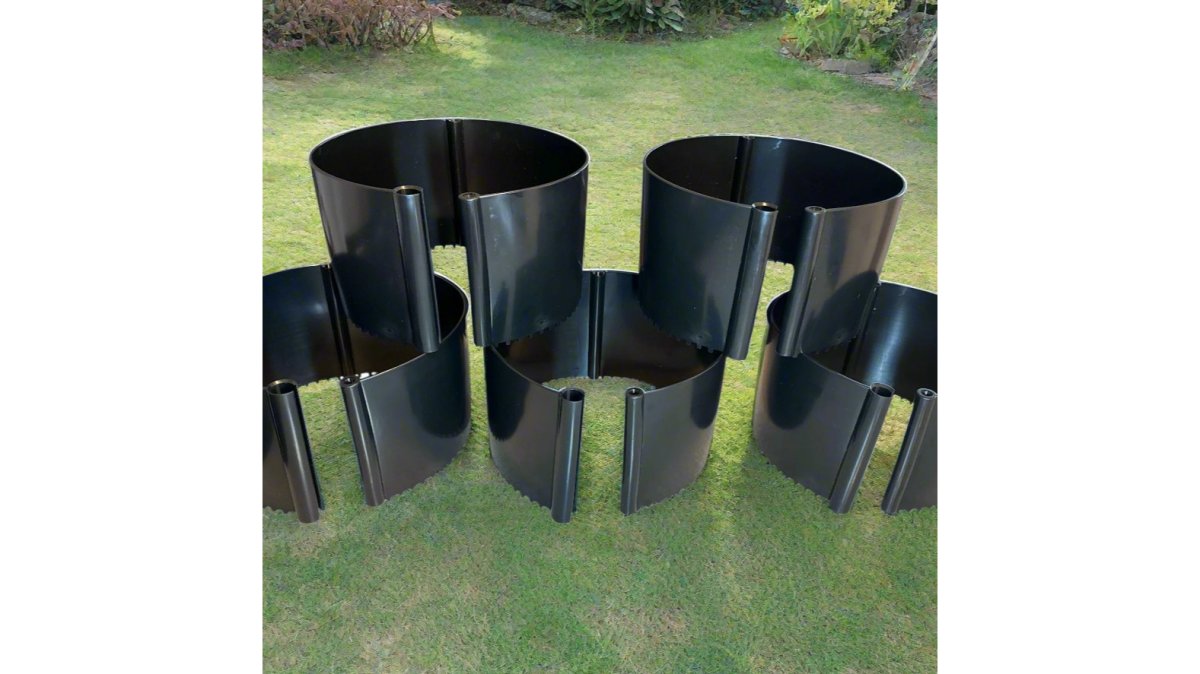
For gardeners who want to reduce watering frequency and ensure water reaches the roots, a watering ring is an effective tool. The Garden Water Ring holds up to 2 gallons of water directly at the root zone. Its patented, USA-manufactured design prevents runoff and evaporation, even on sloped terrain. Water seeps slowly into the soil instead of pooling on the surface or running off. This encourages deep root development and cuts down on how often you need to water.

| Watering Method | Water Delivery | Best For | Key Drawback |
|---|---|---|---|
| Hand watering | Surface, uneven | Small gardens | Inconsistent, time-consuming |
| Sprinkler | Foliage and surface | Lawns | High evaporation, wet leaves |
| Drip irrigation | Slow, root zone | Large beds | Setup cost, clogging |
| Watering ring | Concentrated, root zone | Tomatoes, peppers, squash | Single plant per ring |
The Recovery Timeline: What to Expect After Fixing the Problem
Recovery is not instant. After you correct the underlying issue, most plants need 3 to 7 days to show noticeable improvement. Underwatering recovery: within 24 hours, leaves should perk up after a deep watering; full recovery of new growth takes 5 to 7 days. Overwatering recovery takes longer: after the soil dries out and drainage improves, expect 7 to 14 days before new roots form and wilting stops. Heat stress recovery: plants often recover overnight if watered deeply in the morning. Disease recovery: often there is no recovery; vascular wilts are usually fatal. Remove and discard infected plants to prevent spreading pathogens. If a plant shows no improvement after two weeks, the damage may be permanent. Dig it up and inspect the roots. If they are brown and mushy, the plant will not recover and should be replaced.
Quick Diagnostic Flowchart: Identify the Cause in 60 Seconds
Most guides stop at a generic list of causes. This flowchart goes further by adding species-specific cues, because a wilting tomato plant and a wilting fern rarely share the same trigger. Use this decision tree in order.
Step 1: Check Soil Moisture at Root Depth
Push a finger or a soil probe 3 to 4 inches down, not just at the surface.
- Soil is dry and crumbly: Go to Step 2A (Underwatering).
- Soil is soggy or has standing water: Go to Step 2B (Overwatering).
- Soil is moist but plant still wilts: Skip to Step 3 (Non-Water Causes).
Step 2A: Underwatering Path
- Leaf edges are crispy or papery: The plant has been dry for days. Water deeply and slowly. For a tomato plant, that means 1 to 2 gallons at the base, not a sprinkle. Expect leaves to perk up within 6 to 12 hours.
- Leaves wilt only in the afternoon and recover by evening: This is normal heat stress for many vegetables. No action needed unless the plant stays droopy past sunset for 2 consecutive days.
- Plant is a cucumber or squash: These have large leaves and high water demand. If the soil is dry at 3 inches, they will wilt within hours. Water immediately and add a 2-inch layer of straw mulch to slow evaporation.
Step 2B: Overwatering Path
- Soil smells musty or sour: Root rot is likely. Dig gently around the base and inspect roots. Healthy roots are firm and white or tan. Rotting roots are brown, black, or mushy.
- Leaves are yellowing before they droop: Classic overwatering sign. Stop watering until the top 3 inches of soil dry out. If the plant is in a container, check that drainage holes are not blocked.
- Plant is a succulent or lavender: These species are drought-adapted. Overwatering kills them faster than underwatering. If the soil is wet, remove the plant, let the root ball dry for 24 hours, and replant in well-draining mix.
Step 3: Non-Water Causes (Soil Moisture Is Fine)
Now check the plant itself, not the soil.
-
Cut a stem at a 45-degree angle near the base.
- Brown or dark streaks inside: Vascular wilt (fusarium or verticillium). No cure. Remove the plant.
- Milky, sticky ooze: Bacterial wilt. No cure. Remove the plant and sterilize tools.
- Clean, white or green interior: Not a vascular disease. Go to Step 4.
Step 4: Pest Check
- Look at the stem base for a small hole with sawdust-like material: Squash vine borer. If only one or two leaves wilt, slit the stem, remove the larva, and bury the wounded section. If the whole plant wilts, remove it.
- Check leaf undersides for tiny insects or fine webbing: Aphids or spider mites. Spray with insecticidal soap every 5 to 7 days for 3 weeks.
- No visible pests: Go to Step 5.
Step 5: Nutrient and Environmental Check
- Older leaves have yellow or brown edges with wilting: Potassium deficiency. Apply a balanced fertilizer with potassium, but only after confirming soil pH is between 6.0 and 7.0.
- New growth is distorted or stunted: Calcium deficiency or pH lockout. Test soil pH. Adjust with lime to raise pH or sulfur to lower it.
- Plant is a tomato or pepper with wilting plus dark, sunken spots on fruit: Blossom end rot, a calcium uptake issue. Consistent watering and a calcium-rich amendment help next season.
Species-Specific Shortcuts
| Plant Type | Most Likely Cause of Wilting | Second Most Likely | Action Priority |
|---|---|---|---|
| Tomatoes | Underwatering during fruit set | Fusarium wilt | Water deeply first; check stem streaks if no response in 24 hours |
| Cucumbers/Squash | Heat stress in afternoon | Squash vine borer | Water at base; check stem base for holes |
| Peppers | Overwatering in heavy soil | Bacterial wilt | Check soil drainage; cut stem for ooze |
| Lettuce/Spinach | Heat stress | Underwatering | Provide afternoon shade; water deeply |
| Hydrangeas | Overwatering | Heat stress | Check soil moisture; move to afternoon shade |
| Indoor Ferns | Underwatering (low humidity) | Overwatering (root rot) | Check soil at 2 inches; increase humidity with a pebble tray |
Conclusion: Stop Wilting Before It Starts
The best treatment for wilting is prevention. Consistent, deep watering at the root zone prevents most cases before they start. Check soil moisture before every watering session, mulch to retain moisture, and inspect plants regularly for pests and disease.
Garden Water Ring makes this easier by delivering water exactly where it is needed. The ring's water-tight locking seal and weed wacker proof design are built to last season after season. It works on sloped or uneven ground where runoff is a constant problem, and it reduces watering frequency so you spend less time with the hose. Backed by a 30-day money-back guarantee, it is a low-risk upgrade for any vegetable garden. Get started with Garden Water Ring and give your plants the consistent hydration they need to thrive.
Frequently Asked Questions
Can plants recover from wilting?
Yes, most plants recover from wilting if you catch the cause early and correct it. Plants that wilt from underwatering usually perk up within a few hours of a deep watering. Plants suffering from overwatering take longer, often 3-7 days, as the roots need time to dry out and recover from root rot. Heat-stressed plants typically recover overnight once temperatures drop. The key is acting quickly. If the roots have completely rotted or the stems have snapped, recovery is unlikely, but healthy plants are resilient and will bounce back with the right care.
Does overwatering cause plants to wilt?
Yes, overwatering is a leading cause of wilting, and it's counterintuitive for many gardeners. When soil is waterlogged, it fills the air pockets that roots need to breathe. This suffocates the root system, preventing water uptake and causing the plant to wilt even though the soil is wet. Overwatering also encourages root rot, a fungal infection that destroys the roots. To check, feel the soil a few inches down. If it's soggy and the plant is wilting, stop watering and let the soil dry out. Improving soil drainage can prevent this in the future.
What are the signs of heat stress in garden plants?
Heat stress symptoms include leaves that look scorched or crispy at the edges, and foliage that droops or wilts during the hottest part of the day, only to recover in the evening. You may also see sunscald on fruits like tomatoes and peppers, where they develop pale, leathery patches. In severe cases, plants may drop flowers or fruit to conserve energy. To prevent heat stress, water deeply in the morning so moisture reaches the root zone, and provide afternoon shade with shade cloth. Mulching helps keep the soil cool and reduces evaporation.
How can I tell if wilting is caused by root rot or just dry soil?
The fastest way to tell is to check the soil moisture and the roots. For dry soil, stick your finger two inches into the ground; if it feels bone dry, underwatering is likely. For root rot, the soil will feel wet or soggy. You can also gently dig around the base of the plant. Healthy roots are firm and white or light tan. Roots affected by rot are brown or black, mushy, and may have a foul odor. A plant with root rot will continue to wilt even after you water it, because its root system can't absorb moisture.

Leave a comment
This site is protected by hCaptcha and the hCaptcha Privacy Policy and Terms of Service apply.