
Table of Contents
- Why American Made Gardening Equipment Deserves a Spot in Your Shed
- The Durability Difference: Forged Steel, Hickory Handles, and Heat-Treated Parts
- Garden Water Ring Benefits: A Case Study in Domestic Manufacturing
- How Domestic Manufacturing Boosts Quality Control and Consistency
- Supporting Local Jobs and the Economy with Every Purchase
- Lifetime Warranties and Repairability: The Long-Term ROI
- How to Identify Authentic American Made Tools
- What About the Environment? Shorter Supply Chains, Lower Impact
- Frequently Asked Questions
Last Updated: September 7, 2026
Why American Made Gardening Equipment Deserves a Spot in Your Shed
The benefits of choosing american made gardening equipment go far beyond a simple label on a handle. When you buy a tool forged domestically, you are investing in a product built from higher-grade materials, held to stricter quality standards, and backed by a workforce that depends on its reputation. Garden Water Ring manufactures watering solutions in the USA.
Most gardeners replace cheap imported tools every couple of seasons. A trowel that bends, a rake head that snaps off, or a watering ring that cracks under summer sun creates hidden costs that add up quickly. American made gardening equipment is designed to outlast those frustrations, often carrying warranties that signal real confidence from the manufacturer.
In this guide, we break down the seven benefits that matter most, from material science to long-term return on investment. We will also show you how to verify that a tool is genuinely made here, because the label alone does not always tell the truth.
The Durability Difference: Forged Steel, Hickory Handles, and Heat-Treated Parts
The real difference between a tool that lasts decades and one that fails in a single season comes down to material selection and heat treatment. American manufacturers typically use forged steel or high-carbon steel for working heads, which is denser and more resilient than the stamped sheet metal found in many budget imports. Forged steel is not just a marketing term; it describes a process where metal is compressed under extreme pressure, aligning its grain structure for superior strength.
Handle integrity matters just as much as the metal. Domestic tools frequently use ash wood or hickory handles, both known for their shock absorption and natural flexibility. These woods are harvested, dried, and fitted with an eye toward long-term ergonomic design, reducing hand fatigue during extended soil aeration or transplanting sessions.
Heat-treating is the final step that separates professional-grade tools from the rest. This process hardens the metal and makes it rust-resistant, ensuring the edge stays sharp and the head stays true. A common mistake is assuming all steel is the same; the difference between an annealed and a properly heat-treated blade is the difference between a tool that needs replacing and one you pass down.
Garden Water Ring Benefits: A Case Study in Domestic Manufacturing
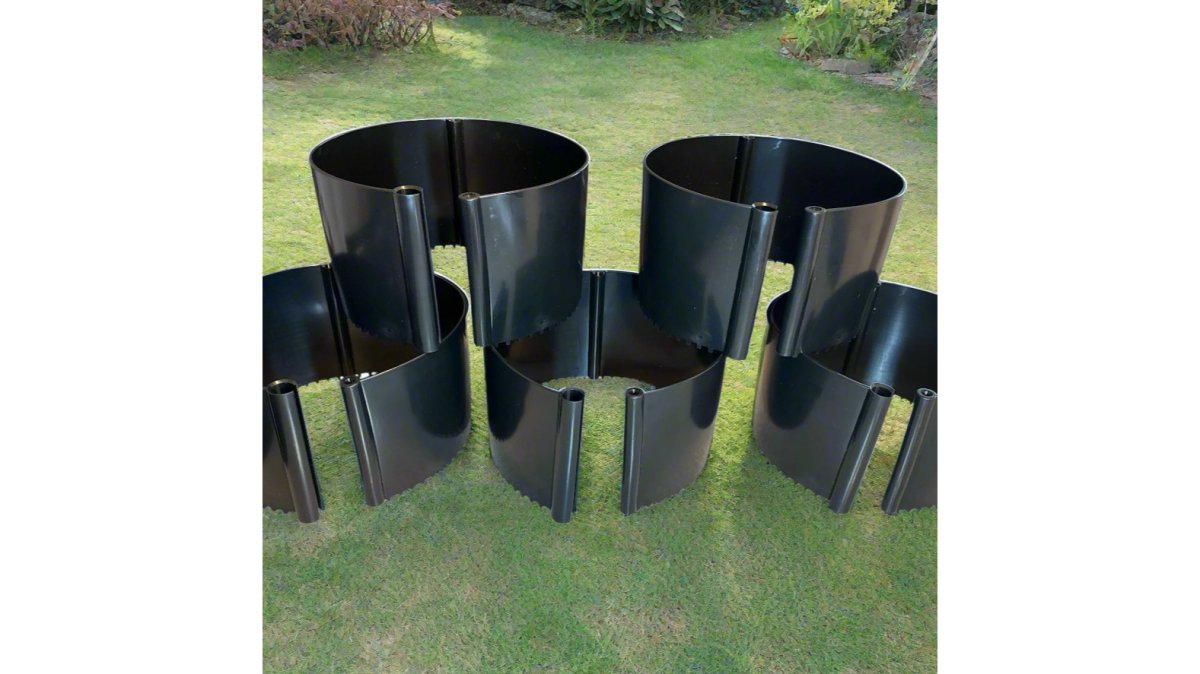
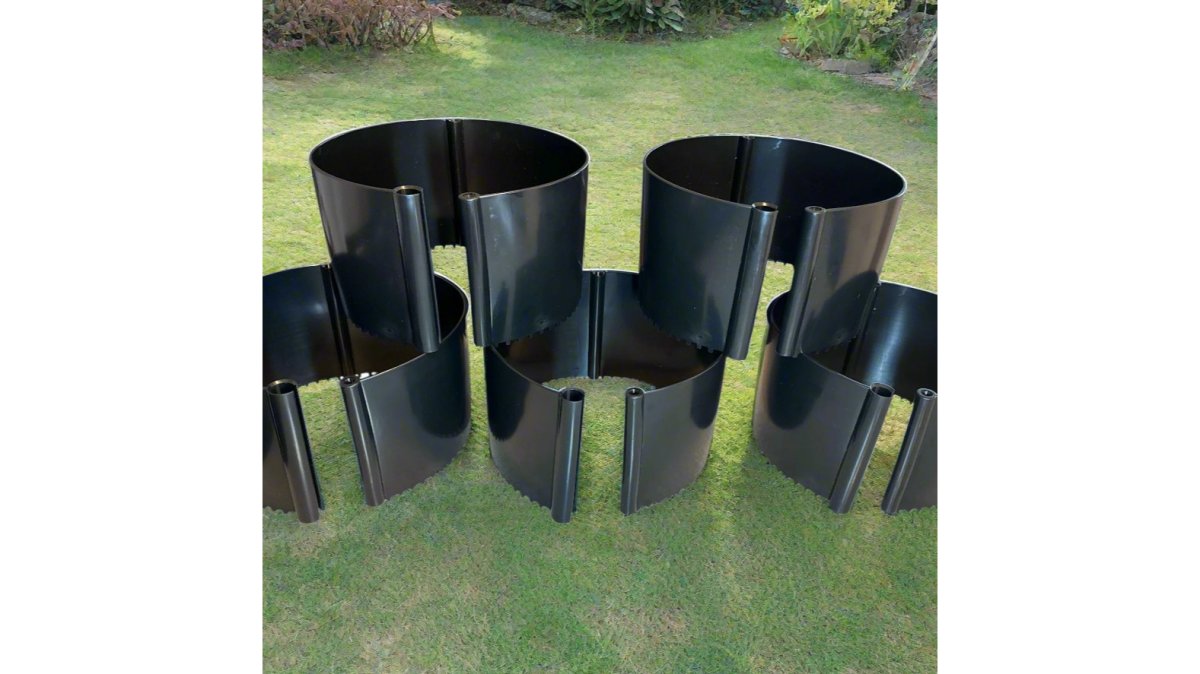
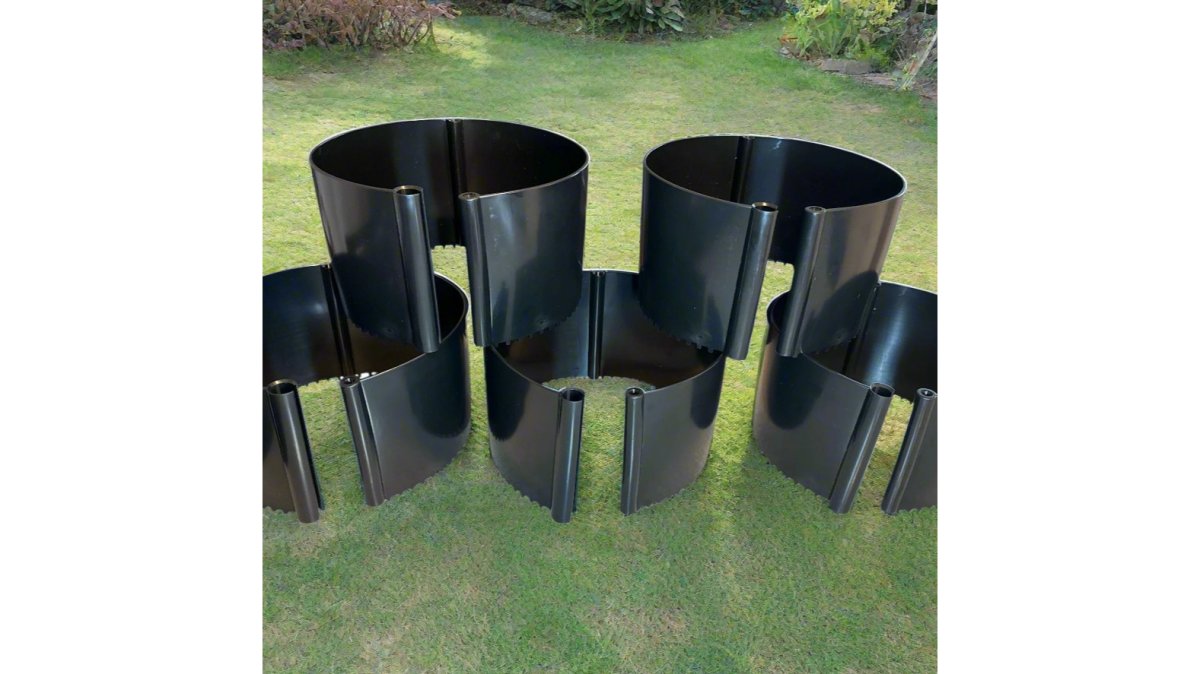
To understand what domestic production actually delivers, look at a specific product category: the watering ring. The Garden Water Ring is a patented, one-piece design manufactured entirely in the USA. This single-piece construction eliminates the weak joints that cause cheaper rings to leak or separate after a season of freezing and thawing.
The benefits of this approach are concrete. The ring holds up to 2 gallons of water, delivering hydration directly to the root zone where plants need it most. Because it is weed wacker proof and weather-resistant, it survives the rough handling that comes with regular garden maintenance. The water-tight locking seal helps prevent slow drips.
What most guides miss is how manufacturing location affects design iteration. When production happens domestically, the engineers who design the product walk the same floor as the people who build it. This feedback loop leads to faster fixes and genuine quality assurance. A cheaper imported ring might look similar in a product photo, but the plastic composition, wall thickness, and seal tolerances tell a different story when you hold it in your hands.
How Domestic Manufacturing Boosts Quality Control and Consistency
Quality control is not just about catching defects; it is about consistency across thousands of units. Domestic factories operate under stricter oversight and typically maintain documented quality assurance protocols that cover every batch. When a manufacturer controls the entire supply chain, from raw material sourcing to final assembly, they can trace a flaw back to its source in hours, not weeks.
This traceability is a form of supply chain transparency that imports rarely offer. If a domestic tool fails, the maker can identify the exact heat-treatment batch or handle supplier responsible. For the buyer, this translates into fewer duds and a more predictable product. You are not gambling on whether you received a good unit from a container ship; you are buying a tool that was inspected before it left the facility.
The contrast with overseas production is stark. Many imports come from facilities where the buyer has little visibility into the manufacturing process, and quality can vary wildly between shipments. American made gardening equipment, by contrast, benefits from a regulatory environment and a cultural standard that treats a defective product as a serious reputational failure.
Supporting Local Jobs and the Economy with Every Purchase
Every domestic tool purchase is a direct investment in the local economy. When you buy american made gardening equipment, a larger share of that money stays in the community, supporting wages for factory workers, engineers, and logistics teams. This ripple effect strengthens the manufacturing sector, which has faced significant pressure from overseas competition over the past decades.
There is a human element to this choice that spreadsheets cannot capture.
Choosing domestic also supports a network of smaller suppliers. American manufacturers source their steel, wood, and packaging from other domestic businesses, creating jobs beyond the factory floor. This ecosystem approach means your single purchase supports multiple families and helps maintain the skilled labor force needed to keep the industry alive for the next generation.
Lifetime Warranties and Repairability: The Long-Term ROI
The price tag on a domestic tool is often higher, but the total cost of ownership tells a different story. Many American manufacturers back their products with a lifetime warranty, a promise that signals they expect the tool to outlast its owner. This is the strongest form of quality assurance available, and it is rare among imported goods.
Repairability is the second half of the ROI equation. A broken handle on a quality domestic tool can often be replaced, returning the tool to service for a fraction of the cost of a new unit. Cheaper imports are typically designed to be disposable; when the plastic ferrule cracks or the handle splinters, there is no repair path, and the entire tool heads to a landfill.
Consider the cost-benefit analysis over a decade. A cheap imported trowel might cost less upfront but may need replacing three or four times in that period. A quality domestic tool, purchased once and repaired when needed, often proves cheaper in the long run while delivering better performance every single season.
How to Identify Authentic American Made Tools
Identifying genuine american made gardening equipment requires more than reading the packaging. Federal regulations govern the use of "Made in USA" claims, but enforcement relies heavily on consumer awareness. The Federal Trade Commission guidelines on Made in USA claims state that a product must be "all or virtually all" made in the United States to use the label without qualification.
Start by looking for specific phrases. "Assembled in USA" is a different claim than "Made in USA" and allows for significant foreign content in the components. Look for manufacturers who specify their materials, such as "domestic forged steel" or "American hickory." This level of detail suggests a transparent supply chain rather than a marketing team hiding behind a vague label.
Check for a physical address and contact information. A genuine domestic manufacturer will have a US-based customer service team and often a facility you can visit or call. Be wary of products that list a US address for returns but ship from overseas warehouses. Finally, look for the warranty. A lifetime warranty is a strong signal, because a manufacturer who plans to be around in 20 years is more likely to build a tool that lasts that long.
What About the Environment? Shorter Supply Chains, Lower Impact
The environmental argument for domestic manufacturing is compelling, though it is rarely the primary reason people buy. Shorter supply chains mean fewer shipping miles, which translates to a smaller carbon footprint per tool. A forged steel trowel shipped from a domestic factory travels hundreds of miles, not thousands, reducing the emissions associated with transoceanic freight.
Domestic factories also tend to operate under stricter environmental regulations regarding emissions, waste disposal, and worker safety. This regulatory framework, enforced by agencies like the Environmental Protection Agency, ensures that the production of your tools does not come at the cost of polluted waterways or unsafe working conditions. This is a form of sustainable gardening that extends beyond the compost pile.
Durability itself is an environmental win. A tool that lasts 25 years keeps several disposable imports out of the landfill. When you factor in the repairability of domestic tools, the waste reduction compounds further. For the environmentally conscious gardener, choosing quality over quantity is one of the most effective ways to reduce the ecological footprint of their hobby.
| Consideration | Imported Tool | American Made Tool |
|---|---|---|
| Typical Lifespan | 2-4 seasons | 15-25+ years |
| Repair Options | Rarely available | Often repairable |
| Warranty | Limited | Often lifetime |
| Supply Chain Length | 8,000+ miles | Under 1,000 miles |
| Cost Per Year of Use | Higher over time | Lower over time |
The case for american made gardening equipment rests on a simple foundation: quality, accountability, and long-term value. From the forged steel in your hand to the lifetime warranty that backs it, domestic tools represent a smarter investment for your garden and your wallet. The durability of a heat-treated blade and the comfort of a hickory handle are important considerations for gardeners.
When you choose tools built by your neighbors, you also support the local economy and reduce the environmental cost of shipping goods across the ocean. The Garden Water Ring embodies these principles, offering a patented, one-piece watering solution manufactured entirely in the USA. Its weed wacker proof design and water-tight locking seal are engineered to handle the demands of a real garden, not just a showroom floor.
If you are ready to upgrade your watering routine with a product that matches the durability of your favorite forged steel trowel, explore what a domestic manufacturer can offer. Get started with Garden Water Ring and see how consistent root-zone hydration can benefit your vegetable patch this season.
Frequently Asked Questions
What are the primary benefits of buying American-made gardening tools?
The main benefits come down to durability, accountability, and economic impact. Domestic manufacturers typically use higher-grade materials like forged steel and ash wood, and they stand behind their work with lifetime warranties because they control the whole process. You also support local jobs and shorten the supply chain, which cuts shipping emissions. For home gardeners, this means tools that survive decades of heavy use and can be repaired rather than replaced.
What should I look for when identifying authentic USA-made gardening gear?
Look for explicit 'Made in USA' labels with a city and state, not just a vague 'assembled in America' claim. Check the materials: domestic tools often use forged steel, heat-treated heads, and solid ash or hickory handles. A genuine manufacturer will be transparent about its factory location and may offer a lifetime warranty. Be wary of brands that only assemble imported parts domestically, as that does not carry the same quality assurance.
Are American-made garden tools more sustainable than imported alternatives?
Generally, yes. A shorter supply chain means fewer shipping miles and lower carbon emissions. Domestic factories are also subject to stricter environmental regulations regarding waste and emissions than many overseas facilities. Because these tools are built to last and are often repairable, they keep landfills from filling up with broken plastic handles and rusted heads. This aligns well with sustainable gardening practices focused on long-term stewardship.

Leave a comment
This site is protected by hCaptcha and the hCaptcha Privacy Policy and Terms of Service apply.