

Table of Contents
- Step 1: Diagnose Where Water Actually Goes
- Step 2: Slow Runoff With Swales and Check Dams
- Step 3: Redirect Downspouts and Build a Rain Garden
- Step 4: Garden Drainage Solutions for Slopes That Hold Water
- Step 5: Soil and Mulch Fixes That Increase Infiltration
- Step 6: Tips for Gardening in Dry Climates Without Wasting Water
- Step 7: DIY vs Professional Grading, Costs, and Upkeep
- Frequently Asked Questions
Last Updated: September 11, 2026
Step 1: Diagnose Where Water Actually Goes
Before buying a single bag of mulch, figure out how to stop water runoff in garden beds by tracing the path water takes across your yard. Most runoff problems trace back to two things: slope and soil compaction. Water hits the surface, can't soak in fast enough, and follows gravity downhill.
Reading Your Slope and Soil
After a heavy rain, watch where water pools and where it races. A percolation test tells you how fast your soil absorbs water: dig a hole about 30 centimeters deep, fill it, and time the drain. Water that sits for hours means compacted or clay-heavy soil; water that vanishes quickly means your problem is slope, not absorption.
Finding the Real Catchment Area
The catchment area is every surface that sends water toward your garden: roof, driveway, neighboring slopes. A roof shedding onto one side of your yard can dump hundreds of gallons in a single storm. Walk your property line and note every hard surface, that's your true water volume, and it explains why a small bed floods even when rain seems light.
Step 2: Slow Runoff With Swales and Check Dams
A swale is a shallow, vegetated channel that carries water slowly across a slope instead of letting it rush downhill. Dig one along the contour, about 15 to 30 centimeters deep and 45 centimeters wide, and plant it with native grasses so water infiltrates rather than escapes.
Check dams are small barriers placed across a swale or ditch, built from rocks, logs, or compacted soil and spaced every few meters. Each one slows runoff velocity so sediment settles and water soaks in. Keep them low, tall dams blow out the sides during heavy storms.
| Fix | Best For | Effort | Maintenance |
|---|---|---|---|
| Swale | Gentle to moderate slopes | Moderate | Clear debris twice yearly |
| Check dam | Steep channels, gullies | Moderate | Reset rocks after storms |
| Rain garden | Roof runoff collection | High | Weed and re-mulch yearly |
| Permeable paving | Driveways, patios | High | Sweep to prevent clogging |
| Mulch and compost | Compacted beds | Low | Top-dress each season |
Step 3: Redirect Downspouts and Build a Rain Garden
Downspout diverters capture roof runoff and send it to a rain garden instead of your foundation or garden beds. A rain garden is a shallow, planted depression that collects stormwater and lets it soak in over a day or two, one of the most effective ways to stop water runoff in garden areas fed by roof drainage.
Sizing and Siting the Basin
Site your rain garden at least 3 meters from the foundation and downhill from the downspout, sized to roughly 20 to 30 percent of the roof area draining into it. A 50-square-meter roof section needs a 10- to 15-square-meter basin. Native switchgrass, coneflower, and sedge tolerate the wet-dry cycles a rain garden delivers.
Step 4: Garden Drainage Solutions for Slopes That Hold Water
Sloped beds lose water before roots can drink it. Garden drainage solutions for slopes fall into three tiers, and the right one depends on how steep the grade is and how much water the slope receives.
Match the Fix to the Grade
Measure your slope first with a line level and string: stretch the string between two stakes 10 feet apart along the fall line, level it, then measure the vertical drop at the downhill stake. A 1-foot drop over 10 feet is a 10 percent slope. That number drives everything.
- Under 5 percent: Water moves slowly enough that aeration, compost, and mulch usually solve the problem. You rarely need hard drainage.
- 5 to 10 percent: A planted berm along the downhill edge of the bed catches sheet flow and holds it in the root zone. Build the berm 6 to 12 inches tall and 18 to 24 inches wide at the base, and plant it with deep-rooted natives so it holds its shape.
- 10 to 20 percent: Pair the berm with a shallow swale on the contour above the bed, and consider a buried perforated drain line at the toe of the slope for storm surges.
- Over 20 percent: This is where DIY gets risky. Terracing, retaining structures, or engineered drainage are usually required, and many municipalities require a permit for retaining walls above a certain height (commonly 3 to 4 feet, but check your local code).
Building a Buried Drain Line That Actually Drains
A French drain is the workhorse for slope-toe drainage. Mechanics matter more than materials:
- Trench dimensions: Dig 12 to 18 inches deep and 12 inches wide. Deeper is not better, the pipe needs to sit below the root zone but above any hardpan.
- Line the trench with non-woven landscape fabric, leaving enough overhang to wrap the top.
- Add 2 to 3 inches of washed gravel (¾-inch clean stone, not pea gravel, which migrates).
- Lay perforated rigid PVC or corrugated pipe with the holes facing down, at a minimum 1 percent fall (about ⅛ inch per foot). Slope the pipe, not the trench floor.
- Cover with 4 to 6 inches of gravel, then fold the fabric over the top to keep fines out.
- Backfill with topsoil and sod or seed over it.
Daylight the outlet to a dry well, pop-up emitter, or downhill vegetated area. A drain line that dead-ends is a bathtub, not a drain.
Root-Zone Watering on Slopes
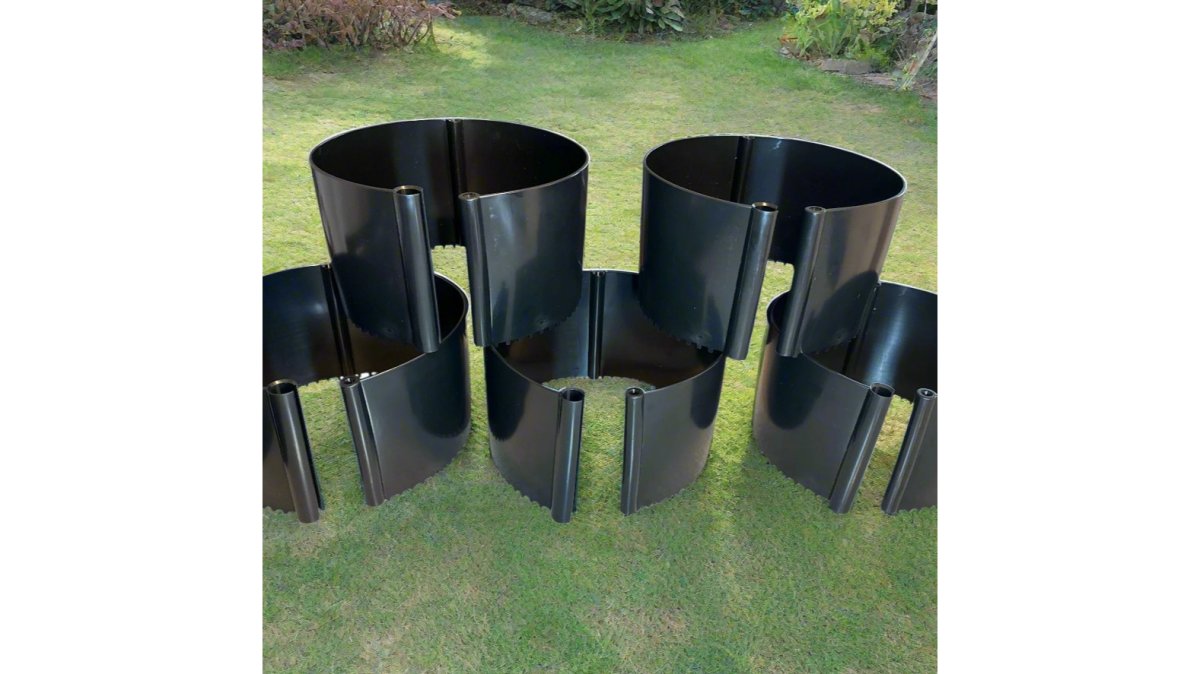
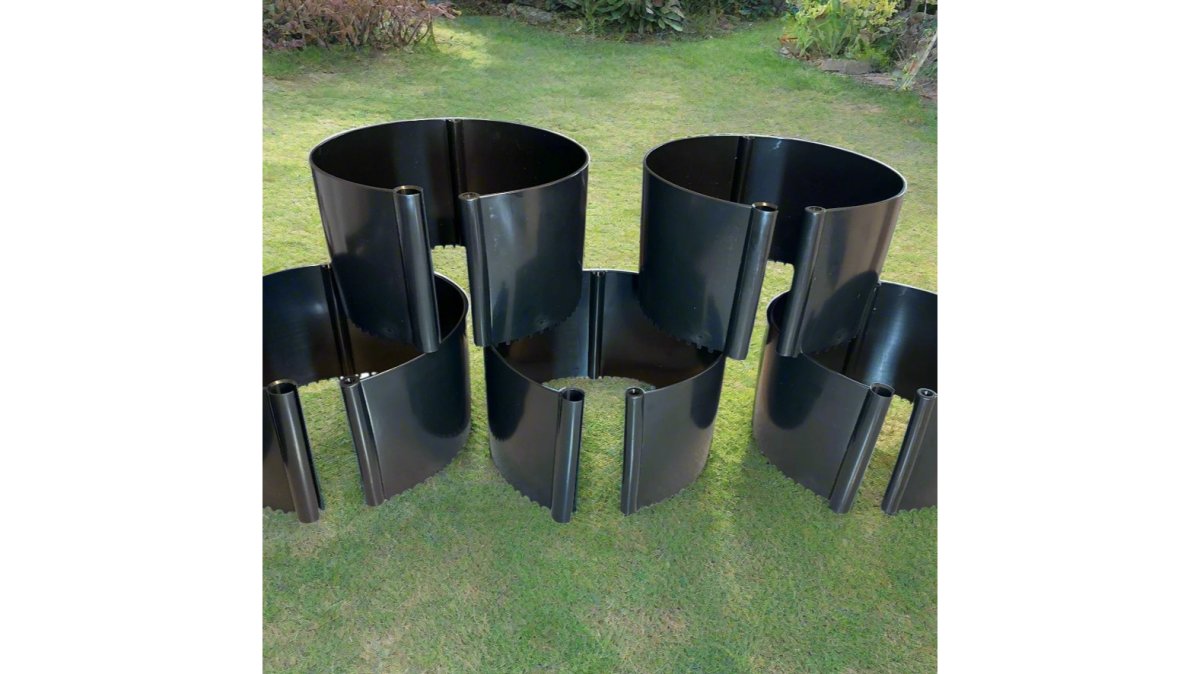
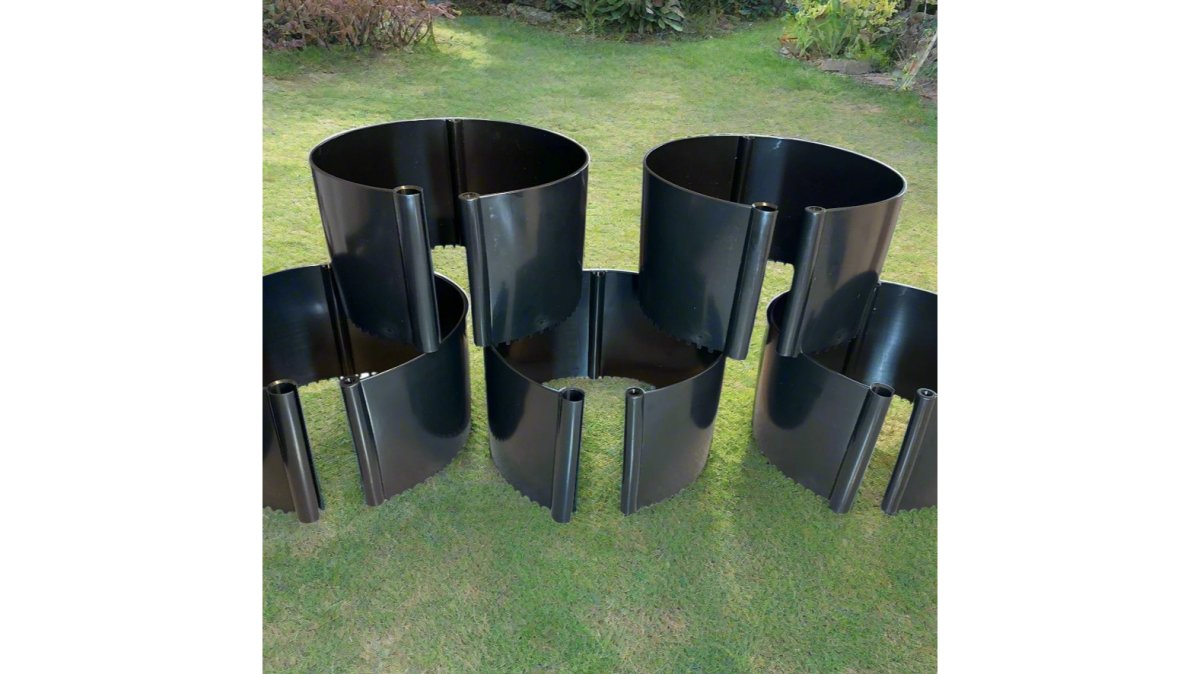
Even with drainage in place, broadcast irrigation on a slope wastes water because it runs off before soaking in. The Garden Water Ring holds up to 2 gallons and releases it directly at the root zone, so gravity doesn't steal your water before plants absorb it. Its water-tight locking seal helps it perform on uneven ground.
Step 5: Soil and Mulch Fixes That Increase Infiltration
Compacted soil is the silent cause of most runoff. Aerate beds in spring by pushing a garden fork 15 to 20 centimeters in and rocking it, then work 5 to 8 centimeters of compost into the top layer. Compost opens the pore space that lets infiltration happen instead of surface flow.
Mulch slows raindrop impact and keeps soil moist between waterings. Apply 5 to 8 centimeters of shredded bark or straw, a few centimeters off plant stems, and reapply each season as it breaks down. It also reduces the saturation swings that stress tomato and pepper roots.
Step 6: Tips for Gardening in Dry Climates Without Wasting Water
Tips for gardening in dry climates start with timing: water early morning so less evaporates before roots absorb it. Group plants with similar water needs together, hydrozoning, so you're not soaking drought-tolerant herbs alongside thirsty squash.
Deep, infrequent watering beats daily light sprinkling, it pushes roots downward where soil stays cool and moist longer. A ring or basin delivering water straight to the root zone cuts evaporation losses dramatically versus overhead spraying. Add a 5-centimeter layer of gravel or mulch to shade the surface and slow moisture loss further.
Step 7: DIY vs Professional Grading, Costs, and Upkeep
Most guides stop at 'call a pro if it's bad.' Here's the decision framework most homeowners actually need, plus the maintenance schedule that keeps a working system from failing in year two.
The DIY vs. Pro Decision Framework
Run through these four questions before you pick up a shovel:
- Is water moving toward the foundation? If yes, this is a pro job. Regrading within 6 feet of a foundation can void a homeowner's insurance claim if it later contributes to water intrusion, and correcting it usually means moving soil, not adding drainage.
- Is the slope steeper than 20 percent? Above that threshold, terracing and retaining structures need engineering. A landscape contractor can reshape topography; a licensed landscape architect or civil engineer is typically required when a wall exceeds local height limits or when drainage ties into municipal storm infrastructure.
- Does the fix require a permit? Retaining walls, grading that changes drainage patterns, and any connection to a storm sewer usually trigger permits. Permit thresholds vary by municipality, a common cutoff for retaining walls is 3 to 4 feet, but verify with your local building department before digging.
- Is the problem on a neighbor's property? If runoff originates uphill from you, the fix may require a civil conversation, a shared drainage easement, or in some cases a legal remedy. Document the flow path with photos after a storm before you approach anyone.
If all four answers are 'no,' DIY handles it. Swales, check dams, berms, rain gardens, and downspout diverters are all within reach of a homeowner with basic tools and a weekend.
What Pro Work Typically Costs
Costs vary by region, access, and scope, treat these as planning ranges, not quotes:
- Landscape contractor regrading: often quoted per square foot of area reshaped, plus soil and haul-away. Small residential jobs commonly land in the low thousands; larger yards with drainage tie-ins run higher.
- Engineered drainage design: a landscape architect or civil engineer typically charges either a flat design fee or an hourly rate, and the design is usually a prerequisite for the permit.
- Retaining walls: priced per square foot of wall face, and the price climbs sharply with height, drainage requirements, and material choice.
- DIY materials for a French drain: gravel, fabric, pipe, and fittings for a 50-foot run are a modest hardware-store purchase, the labor is the real cost.
Get three written estimates itemizing labor, materials, disposal, and permit handling. A bid that doesn't mention drainage or compaction is a red flag.
Maintenance Schedule That Prevents Failure
Drainage systems fail from neglect, not age. The most common failure mode is debris blocking flow, which backs water up and erodes the channel's own banks. Build this into your calendar:
- Early spring: Clear swales, check dams, and drain inlets of leaves, twigs, and sediment. Inspect berms for animal burrows or washouts and repair before the first heavy rain.
- After every major storm: Walk the system. Reset displaced check dam rocks, re-seat berm edges, and check that pop-up emitters and drain outlets are flowing, not submerged.
- Late spring: Re-mulch beds to 2 to 3 inches, keeping mulch a few inches off stems. Top-dress compost on compacted areas.
- Summer: Inspect downspout diverters and clean any screens or filters. Check rain garden basins for standing water that lingers more than 48 hours, that signals a clogged or compacted infiltration zone.
- Early fall: Before the rainy season, clear gutters and downspouts, re-check drain line outlets for sediment blockage, and replant any bare spots in rain gardens with native vegetation.
- Late fall: Do the leaf cleanup on swales and channels. This is the single highest-value maintenance task of the year, a swale packed with leaves in November is a swale that fails in January.
- Annually: Aerate compacted beds, inspect retaining walls for bowing or weep-hole clogs, and photograph the whole system so you can spot changes year over year.
Frequently Asked Questions
How do I direct water runoff away from my garden?
Start by finding the lowest point where water pools, then use a shallow swale or a buried drainage pipe to carry it toward a rain garden or a planted depression. Downspout diverters move roof water into that same basin instead of against the foundation. On sloped beds, a check dam every few feet slows the flow so it soaks in rather than sheeting off. The goal is to slow water down and spread it out, not to send it somewhere else as fast as possible.
Does mulch stop water runoff?
Mulch helps, but only partly. A 2 to 3 inch layer of coarse mulch breaks the impact of raindrops and gives water time to infiltrate, which reduces runoff velocity and sediment control problems. It will not stop runoff on a steep slope or during a heavy storm, because the soil underneath can become saturated. Pair mulch with a swale, check dam, or root-zone watering ring so water has somewhere to go once the surface layer is soaked.
What soaks up water in the garden?
Native vegetation with deep, fibrous roots does the heaviest lifting. Switchgrass, coneflower, joe-pye weed, and sedges all tolerate short floods and keep pulling water into the soil. Amending with compost raises water infiltration in clay, and a rain garden planted with these species can absorb a large share of roof and driveway runoff. Permeable surfaces like gravel paths and permeable pavers also let water pass through instead of running off.
Will a 2-gallon watering ring help on a steep slope?
A ring that holds water at the root zone keeps it from sheeting down the slope before it can soak in. It releases water slowly right where the roots are, so soil saturation happens below the surface instead of on top. That is the same principle behind check dams and swales, just at plant scale. For sloped beds, place the ring level around the base of each plant and let the overflow device direct excess to the next plant downslope.

Leave a comment
This site is protected by hCaptcha and the hCaptcha Privacy Policy and Terms of Service apply.