
Table of Contents
- Why Raised Beds Deliver Higher Yields
- Best Soil Amendments for Raised Beds
- How to Keep Garden Soil Moist Without Constant Watering
- Intensive Planting and Spacing Strategies
- Crop Rotation and Plant Guilds for Sustained Yields
- Maximizing Sunlight and Managing Microclimates
- Advanced Fertilization for Higher Nutrient Density
- Staggered Planting and Extended Harvest Cycles
- Frequently Asked Questions
Last Updated: September 23, 2026
Why Raised Beds Deliver Higher Yields
Raised beds concentrate growing conditions in a contained space, which naturally improves vegetable yield in raised beds compared to traditional in-ground gardens. The soil quality, drainage, and microclimate are all under the gardener's control. This control translates directly to stronger plants and more consistent harvests throughout the growing season.
When you build a raised bed from scratch, you're creating an ideal growing environment. Soil depth, composition, and structure all influence how efficiently plants access water and nutrients. Deeper beds allow root systems to expand fully, which supports larger yields per square foot.
Raised beds also warm faster in spring and cool more gradually in fall, extending the growing season on both ends and adding weeks of productive growing time.
Best Soil Amendments for Raised Beds
Building Your Foundation Mix
A balanced foundation typically combines topsoil, compost, and organic matter. Most gardeners find success with a 40-40-20 mix: 40% high-quality topsoil, 40% finished compost, and 20% additional organic amendments like aged bark or coconut coir.
Compost improves soil structure, increases nutrient density, and enhances water-holding capacity. Source compost from reliable suppliers to ensure it's free of weed seeds and pathogens.
Organic matter breaks down over time, releasing nutrients slowly and reducing the need for synthetic fertilizers, so soil becomes more productive year after year.
Annual Soil Renewal and Compost Integration
Each season, add 1 to 2 inches of finished compost to the bed's top layer to replenish organic matter and add fresh nutrients.
Crop rotation balances nutrient demands and reduces pest and disease pressure. A simple three-year rotation cycle works well for most home gardens.
Mulching the bed surface with 2 to 3 inches of organic mulch protects soil structure, moderates temperature, and suppresses weeds while adding organic matter as it breaks down.
How to Keep Garden Soil Moist Without Constant Watering
Mulching to Retain Moisture and Suppress Weeds
A 2 to 3-inch layer of organic mulch reduces evaporation significantly and moderates soil temperature.
Straw and shredded leaves are excellent choices for vegetable beds because they break down gradually and add organic matter. Avoid hay, which often contains weed seeds.
Mulch suppresses weeds by blocking sunlight, reducing competition for water and nutrients.
Root-Zone Watering for Efficiency
Root-zone watering delivers water directly to the root zone, reducing evaporation and keeping foliage dry to discourage fungal diseases.
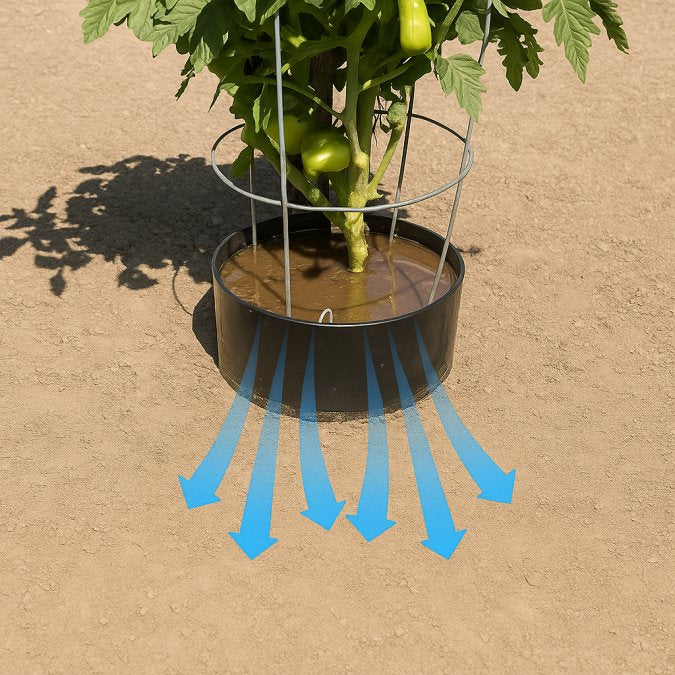
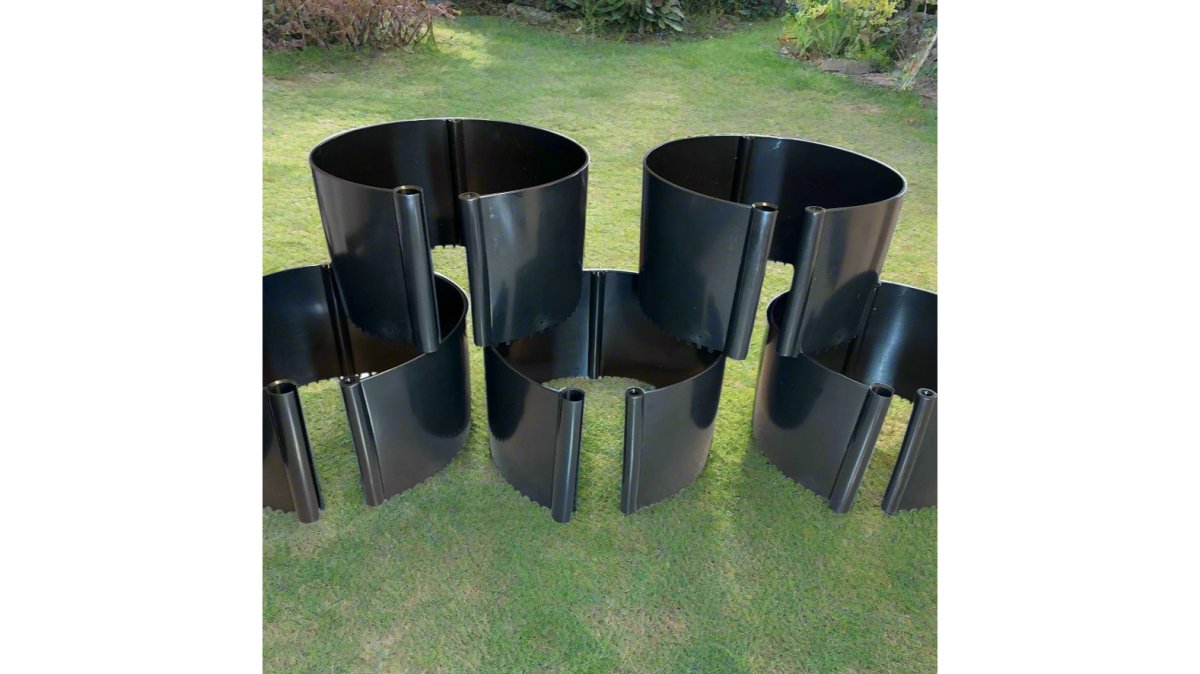
A Garden Water Ring concentrates water and fertilizer around the plant's root zone, delivering up to 2 gallons per fill. The one-piece design uses a sliding male/female locking system and includes two 11-inch holding spikes for stability. It installs about 2 inches into the soil with the teeth facing downward and requires no tools. The ring reduces runoff and evaporation, which means less frequent watering overall.

Root-zone watering allows you to apply liquid fertilizer directly where plants need it, improving fertilizer efficiency and preventing runoff on sloped terrain.
Intensive Planting and Spacing Strategies
Square Foot Gardening Principles
Square foot gardening divides a bed into a grid with spacing based on plant size: one tomato per square, four lettuce plants per square, nine beets per square, and sixteen radishes per square. This intensive spacing maximizes yield per square foot while reducing weed pressure.
Match plant density to mature plant size to avoid overcrowding and wasted space. Succession planting within each square extends harvests: plant cool-season crops like lettuce first, then replace them with warm-season crops as temperatures rise.
Vertical Growing for Maximum Space Use
Vertical growing uses trellises, stakes, and cages to direct vining crops upward, increasing air circulation and reducing fungal disease pressure while maximizing sunlight for lower-growing plants.
Train vining crops early in the season, before they become tangled and difficult to manage.
Crop Rotation and Plant Guilds for Sustained Yields
Planning Your Rotation Schedule
Crop rotation prevents soil depletion and reduces disease and pest buildup. Plant families have different nutrient demands and pest pressures. Tomatoes, peppers, and eggplants (nightshades) are heavy feeders that deplete nitrogen. Beans and peas (legumes) add nitrogen through symbiotic relationships with soil bacteria. Root vegetables and leafy greens have lighter nutrient demands.
Companion Planting and Nitrogen Fixation
Companion planting pairs plants that support each other's growth. Beans fix nitrogen from the air into the soil, benefiting heavy-feeding neighbors like tomatoes. Basil repels certain pests while improving tomato flavor. Marigolds attract beneficial insects while deterring others.
Maximizing Sunlight and Managing Microclimates
Sunlight is non-negotiable for vegetable yields. Most vegetables need at least six to eight hours of direct sun daily. Tomatoes, peppers, and eggplants perform best with eight or more hours. Leafy greens tolerate partial shade but still need three to four hours of direct sun.
Advanced Fertilization for Higher Nutrient Density
Nutrient-dense vegetables contain higher concentrations of minerals and vitamins. This depends partly on genetics, but also on soil nutrient availability and plant health. Balanced fertilization throughout the growing season supports both yield and nutrient density.
Staggered Planting and Extended Harvest Cycles
Staggered planting spreads harvests across weeks or months instead of producing everything at once. Plant lettuce, beans, or zucchini every two to three weeks from spring through mid-summer. Each planting reaches maturity at different times, providing continuous harvests rather than overwhelming gluts.
Practice |
Primary Benefit |
Best For |
|---|---|---|
Soil amendment with compost |
Improves nutrient density and water retention |
All vegetable types |
Mulching |
Reduces evaporation and suppresses weeds |
Heat-sensitive crops, sloped beds |
Root-zone watering |
Delivers water efficiently, reduces runoff |
Heavy feeders like tomatoes |
Square foot gardening |
Maximizes yield per square foot |
Small spaces, intensive planting |
Vertical growing |
Increases air circulation, saves space |
Vining crops like cucumbers and beans |
Crop rotation |
Prevents soil depletion, reduces disease |
Sustainable long-term production |
Staggered planting |
Extends harvests across weeks or months |
Continuous supply of fresh vegetables |
Frequently Asked Questions
What's the best way to improve vegetable yield in raised beds on a slope?
Sloped terrain challenges water distribution, but targeted root-zone watering solves this. The Garden Water Ring concentrates water at the plant base rather than letting it run downhill, keeping moisture where roots need it. Pair this with mulch to reduce evaporation and soil compaction, and you'll see better nutrient uptake and stronger growth even on uneven ground.
How do I keep garden soil moist in raised beds without watering every day?
Three strategies work together: add 2–3 inches of organic mulch to reduce evaporation, use root-zone watering to deliver water directly to plant roots instead of wetting the whole bed, and amend your soil with compost and aged organic matter to boost water-holding capacity. These steps reduce watering frequency significantly while maintaining consistent soil moisture.
What are the best soil amendments for raised beds to maximize yields?
Start with a base of 60% topsoil, 30% compost, and 10% aged bark or coconut coir. Each season, top-dress with 1–2 inches of finished compost to replenish organic matter and nutrients. Compost improves soil structure, drainage, and microbial activity—all essential for nutrient density and plant health. University extension programs recommend refreshing 25–30% of your bed's soil annually.
How much more can I grow in a raised bed compared to in-ground gardening?
Raised beds typically yield more per square foot than in-ground gardens because you control soil quality, drainage, and spacing precisely. By combining intensive planting, proper amendments, and efficient watering, home gardeners often see increased harvests in well-managed raised beds.
Should I use drip irrigation or a watering ring for my raised beds?
Both deliver water to the root zone, but they suit different needs. Watering rings like the Garden Water Ring are ideal for portable beds, sloped terrain, or gardeners who want a tool-free, reusable solution that holds up to 2 gallons and concentrates water around individual plants without complex installation.
How often should I rotate crops in raised beds to maintain yield?
Rotate crops annually by plant family. Divide your bed into three zones and move heavy feeders (tomatoes, squash), legumes (beans, peas), and light feeders (lettuce, herbs) to different zones each year. This prevents soil depletion, reduces pest buildup, and maintains consistent yields. Nitrogen-fixing legumes naturally replenish soil between rotations.
What vegetables grow best together in raised beds for maximum yield?
Plant tall crops (tomatoes, peppers) on the north side to avoid shading shorter plants. Pair heavy feeders with nitrogen-fixing legumes: tomatoes with basil and beans, squash with nasturtiums and peas. Companion planting improves nutrient cycling, reduces pest pressure, and lets you grow more in less space while maintaining soil health.
How deep should my raised bed be to maximize vegetable yields?
Most vegetables thrive in 12–18 inches of soil. Root crops like carrots and beets need at least 12 inches; tomatoes and peppers do best with 18 inches or more. Deeper beds allow stronger root development, better drainage, and more organic matter for nutrient absorption—all direct contributors to higher yields and healthier plants.


Leave a comment
This site is protected by hCaptcha and the hCaptcha Privacy Policy and Terms of Service apply.