
Table of Contents
- Why the Best Watering Ring for Vegetable Gardens Beats Sprinklers
- What Efficient Vegetable Garden Irrigation Systems Get Right
- The Benefits of Root Zone Watering for Tomatoes and Peppers
- How to Install Garden Watering Rings in Raised Beds
- Watering Ring vs. Watering Bag: Which Fits Your Garden?
- Material Durability, Sizing, and Soil Compatibility
- Conclusion
- Frequently Asked Questions
Last Updated: September 15, 2026
Why the Best Watering Ring for Vegetable Gardens Beats Sprinklers
The best watering ring for vegetable gardens delivers water straight to the root zone instead of scattering it across leaves and walkways. The best watering ring for vegetable gardens delivers water straight to the root zone instead of scattering it across leaves and walkways. A ring holds a measured volume of water against the soil and lets it soak down slowly, which is exactly how vegetable roots want to drink. A ring holds a measured volume of water against the soil and lets it soak down slowly, which is exactly how vegetable roots want to drink.
Sprinklers lose water to evaporation before it ever reaches the soil, and much of what lands on foliage never makes it to the roots at all. Rings flip that equation. They reduce runoff, cut evaporation, and put moisture where it counts.
Below, we break down how these systems work, how to install one, and how to choose between a ring and a watering bag.
What Efficient Vegetable Garden Irrigation Systems Get Right
Efficient vegetable garden irrigation systems share three traits: they water deeply rather than often, they target the root zone, and they limit surface evaporation. Get those three right and almost everything else follows.
Slow-Release vs. Drip vs. Hand Watering
Slow-release rings, drip lines, and hand watering each solve a different problem. A ring is the simplest of the three and the most forgiving for beginners.
| Method | How It Works | Best For | Main Trade-Off |
|---|---|---|---|
| Slow-release ring | Holds water against the root zone | Raised beds, single plants | One ring per plant |
| Drip irrigation | Emits water through tubing | Long rows, large plots | Setup cost and clogging |
| Hand watering | You carry and pour | Small containers, quick fixes | Inconsistent, shallow |
Drip irrigation shines in long rows where you want a single line feeding many plants. Rings win when you have individual heavy feeders, sloped beds, or you simply do not want to run tubing everywhere. Hand watering is fine for a few pots, but it rarely delivers the deep soak that vegetables need to establish strong roots.
The Benefits of Root Zone Watering for Tomatoes and Peppers
Root zone watering is the practice of applying water directly to the soil around a plant's base rather than over its leaves. For tomatoes and peppers, this changes everything about how the plant grows and how often you have to water.
Deep watering encourages roots to grow downward in search of moisture. Shallow watering does the opposite: it trains roots to stay near the surface, where they dry out fast and leave the plant vulnerable to drought stress. A ring that holds up to 2 gallons releases that water slowly enough for the soil to absorb it fully, which promotes deeper root development and stronger plant establishment.
Tomatoes and peppers are heavy feeders with deep root systems, so they reward this approach. Cucumbers and squash benefit too, especially in raised beds where soil dries faster than in-ground plots.
A common mistake is watering a little every day. That keeps the top inch damp and the roots lazy. Water deeply two or three times a week instead, and let the top layer dry between sessions.
How to Install Garden Watering Rings in Raised Beds
Installing a ring takes minutes and no tools, but placement changes with the crop and the growth stage. The steps below work for any raised bed or in-ground vegetable patch, followed by crop-specific adjustments most guides skip.
The Base Setup
- Water the plant first. Give the root ball a soak so the soil is receptive before you place the ring.
- Clear a circle around the base. Remove mulch and weeds within the ring's footprint so water reaches soil, not debris.
- Center the ring on the plant. Set the ring so the stem sits in the middle and the ring sits flat on the soil.
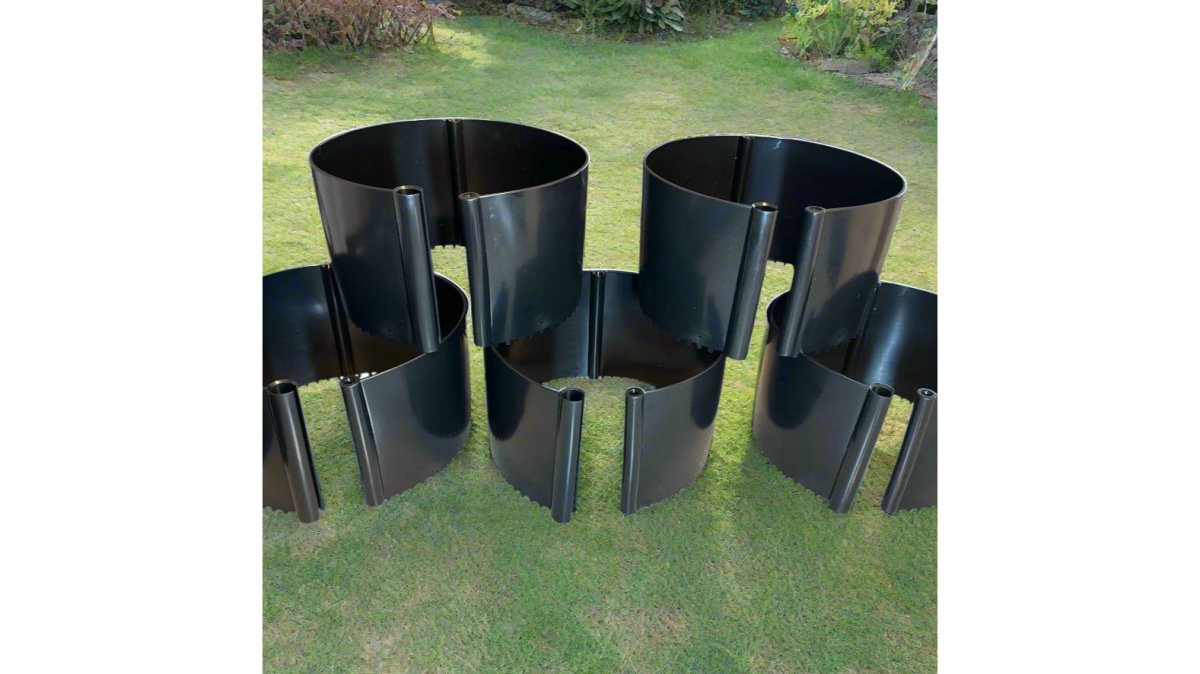
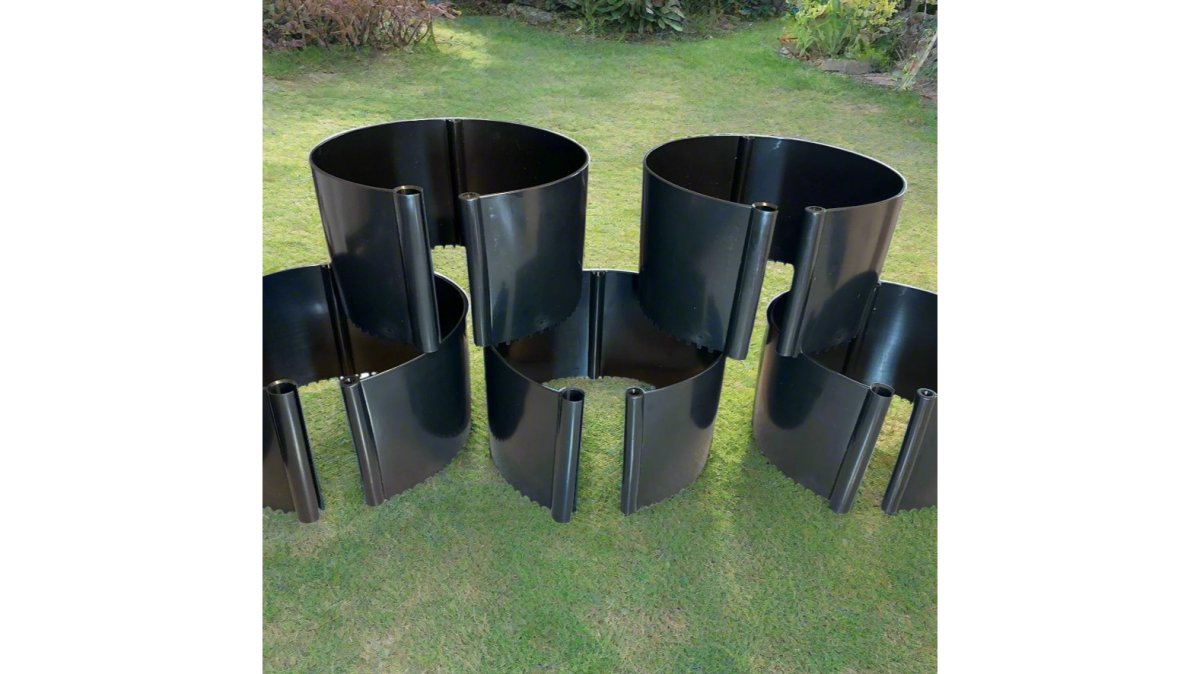
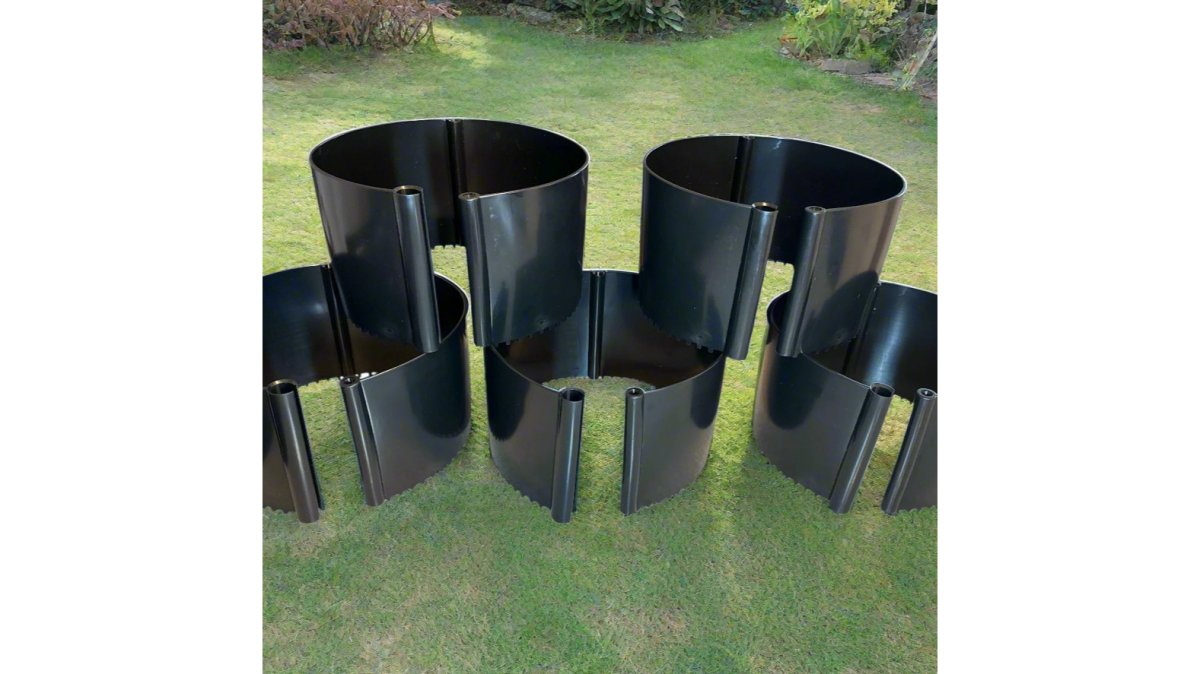
- Press the holding spikes in. Push the included spikes through the ring's tabs to lock it in place on sloped or uneven ground.
- Seal the locking joint. Close the water-tight seal so the ring holds its full volume.
- Fill and let it drain. Pour water into the ring and let it soak down at the soil's own drainage rate.
Expected result: water pools inside the ring and disappears into the soil over several minutes instead of running off the bed.
Adjusting Placement by Vegetable Crop
A 10-inch ring suits most vegetables, but the right distance from the stem depends on the plant's root architecture and how far its canopy spreads.
- Tomatoes: Set the ring 2 to 3 inches out from the stem once the plant is established. Tomato roots extend well past the canopy, so a ring pressed tight against the stem waters only the center of the root mass. As the plant matures, shift the ring outward to follow the expanding root zone.
- Peppers: Peppers have a shallower, more compact root system than tomatoes. Keep the ring closer to the stem, roughly 1 to 2 inches, and expect to refill more often, since the smaller root ball draws down moisture faster in hot weather.
- Cucumbers and squash: These vines run along the ground and their roots spread wide. Place the ring at the base of the hill or mound, not the vine tip, and consider a second ring for sprawling plants once they exceed about 3 feet of spread.
- Leafy greens and herbs: Shallow-rooted crops need less volume per session. A single fill every two to three days is usually enough in moderate weather; cut back in cool, wet stretches to avoid soggy crowns.
Adjusting by Growth Stage
Seedlings and transplants need gentler, more frequent watering than mature plants. When a transplant is first set out, fill the ring only partway for the first week so the shallow young roots are not drowned. Once the plant is actively growing and flowering, fill the ring to capacity and let it drain fully before refilling. During fruit set and ripening, deep but less frequent soaks encourage the steady moisture that reduces blossom-end rot and cracking in tomatoes.
Working With Your Bed's Geometry
In a raised bed, keep the ring inside the bed's footprint so overflow stays in the soil rather than running down the side. On sloped beds, seat the ring on the uphill side of the plant and press both holding spikes in firmly; the ring should sit level even when the ground is not. In tight spacing where two plants share a bed, do not overlap rings, instead alternate fill days so each plant gets its full volume without water migrating sideways.
After the first fill, dig a finger into the soil just outside the ring's edge. If it is dry an inch down, your soil is draining faster than the ring can deliver and you should refill once the pool clears.
Watering Ring vs. Watering Bag: Which Fits Your Garden?
A watering bag wraps around a tree trunk and releases water slowly over hours; a watering ring sits on the ground around a plant's base and holds a fixed volume for a single deep soak. The two are built for different jobs.
Bags make sense for young trees, where a slow multi-hour release keeps a large root ball moist. They are awkward around low vegetable plants because the bag needs a trunk to hang from. Rings fit the ground-level geometry of tomatoes, peppers, and squash far better, and they work on sloped terrain where a bag would sag or tip.
If your garden is mostly vegetables, a ring is the more practical choice. If you are establishing fruit trees alongside your beds, a bag has a place.
Material Durability, Sizing, and Soil Compatibility
Sizing by Vegetable Crop
Soil Type Changes Everything
Conclusion
Frequently Asked Questions
What is the best watering system for a vegetable garden?
For most vegetable gardens, a root-zone watering ring offers the best balance of efficiency and simplicity. It delivers water directly to the root ball, prevents runoff on slopes, and reduces evaporation. Unlike sprinklers that wet foliage and invite disease, a ring like the Garden Water Ring holds up to 2 gallons and releases it slowly into the soil.
How do I install a watering ring for optimal root hydration?
Place the ring around the base of your plant, centering it on the root ball. Push the included holding spikes into the soil to secure it on slopes or in loose beds. Fill the ring with water and let it drain slowly. For new transplants, install the ring immediately to reduce transplant shock. For established plants, position it just outside the leaf canopy so roots grow outward toward the moisture.
Are watering rings effective for raised garden beds?
Yes. Raised beds drain faster than in-ground soil, so water conservation matters more. A watering ring slows the release of water, giving it time to soak in rather than run out the bottom. This is especially helpful for thirsty crops like tomatoes, cucumbers, and squash. The ring also acts as a physical barrier that keeps weeds down and protects the stem from string trimmers.
How long does a watering ring last, and what material should I look for?
Look for UV-stabilized polypropylene or polyethylene. These resist cracking from sun exposure and temperature swings. A one-piece, flexible design lasts longer than rigid plastic that becomes brittle. The Garden Water Ring is made from virgin polypropylene and carries a 30-day money-back guarantee. With proper care, a quality ring should last multiple growing seasons, not just one.

Leave a comment
This site is protected by hCaptcha and the hCaptcha Privacy Policy and Terms of Service apply.